价格之外:配给从未被取消,只是换了账单
Removing the price tag does not remove scarcity; time, status, luck and connections take its place, and the cost is usually booked to those least able to object
I. The Price Tag That Was Removed
A limited number of free seats for a lecture, with registration closing within minutes. A service in short supply allocated by order of registration, so that people arrive hours early. A place that requires three documents, after which a complete file still has to wait for review. These situations look unrelated, yet they share one feature: money is no longer allowed to decide who receives the good. Scarcity did not leave when the price left; the deciding authority simply moved somewhere else.
"Free" describes how payment is collected, not how allocation happens. It says that nobody pays, and says nothing about what ranks ten applicants against three places. Every allocation system has to answer that question, and if it declines to answer, some other mechanism answers on its behalf. The useful question is therefore not whether price should be removed, but what decides in its place once it is gone, and whose account is charged for that decision.
The first instinct is to treat queues, ballots and eligibility checks as technical problems, soluble with a more carefully written procedure. That instinct assumes a shortage of information. Queues do not arise because instructions were unclear. They arise from a harder fact: while more people want something than can be supplied, some filter must operate, and a filter always makes somebody pay. So the question sharpens: why does an arrangement introduced in the name of fairness so often shift the burden onto those least able to object, and leave that burden invisible in every record?
II. The Three Things a Price Does at Once
To see what has been displaced, one has to see what price was doing. In The Wealth of Nations, Adam Smith treats price as the signal that steers labour and capital toward better-paid uses: market prices move around their natural level, high prices attract supply, low prices encourage exit. The word "information" is not yet there — that description came later — but price is already presented as a device that changes many people's behaviour without anyone issuing orders.
Free to Choose makes the layer explicit. The Friedmans argue that a price system aggregates the scattered, mutually unknown preferences of millions into signals people can act on, while supplying incentives to produce more, switch or economise, and simultaneously settling who gets how much. What is usually missed is that these are bundled: registering scarcity, motivating a response and completing the distribution are three faces of one mechanism, not three switches that can be flipped independently.
That yields the key inference. Removing the price tag removes only the step of collecting money. The other two jobs do not disappear — scarcity still has to be registered and behaviour still has to be steered — so they find other carriers. A designer who believes that abolishing price abolishes selection has merely handed selection to a process with no name and no owner. The question shifts from whether to have prices to what the substitute carrier is.
III. Four Substitute Standards and Whom Each One Bills
The first is the queue, which charges time. An hour is formally the same length for everyone, which makes it look like the most equal standard; but the opportunity cost of an hour is not the same. It is far higher for someone paid by the hour, caring for a relative, or tied to a fixed shift. Equally important is how the cost is booked: waiting is recorded as a personal choice — not arriving early enough — so the burden sits with the applicant and enters no statistic.
The second is the ballot, which charges luck. It gives up selection by merit candidly, and it does spread the cost thinly; the price is that it abolishes grounds for appeal. A person not drawn cannot point to an error, because no error occurred. Being unaccountable is both its fairness and its closedness.
The third is eligibility, which charges status. Writing down who qualifies appears to replace arbitrariness with a rule, but conditions can only be built from the past: qualifications already held, records already kept, affiliations already established. Earlier differences are thus fixed into future access. The finer the criteria, the larger the apparatus of proof required, and "proving that one qualifies" becomes a new threshold in its own right — one that is hardest for people unpractised in dealing with paperwork.
The fourth is connection, which charges social capital. It is the cheapest and most flexible, and the least auditable, which is why it can almost never be written into a rule. Once it becomes the real standard, the written rule is decoration.
One further layer belongs here. Thinking in Systems supplies the reminder that rules alter the thing being distributed. With a fixed quantity and unchanging rules, suppliers lose the signal that would tell them to adjust output, while applicants turn to studying the rules themselves. Queue length then becomes the input to the next round of design, and the system begins optimising for shorter lines rather than for met needs. This is often flattened into "quotas cause shortages", but that requires premises: supply must be adjustable, and enough time must pass. Where supply is rigid, what appears first is not shortage but rule-gaming.
IV. The Counter-Case: Some Things Should Not Be Priced
The easy conclusion at this point is to put the price back. That is precisely the step that has to be argued against, and the counter-case is stronger than it first looks.
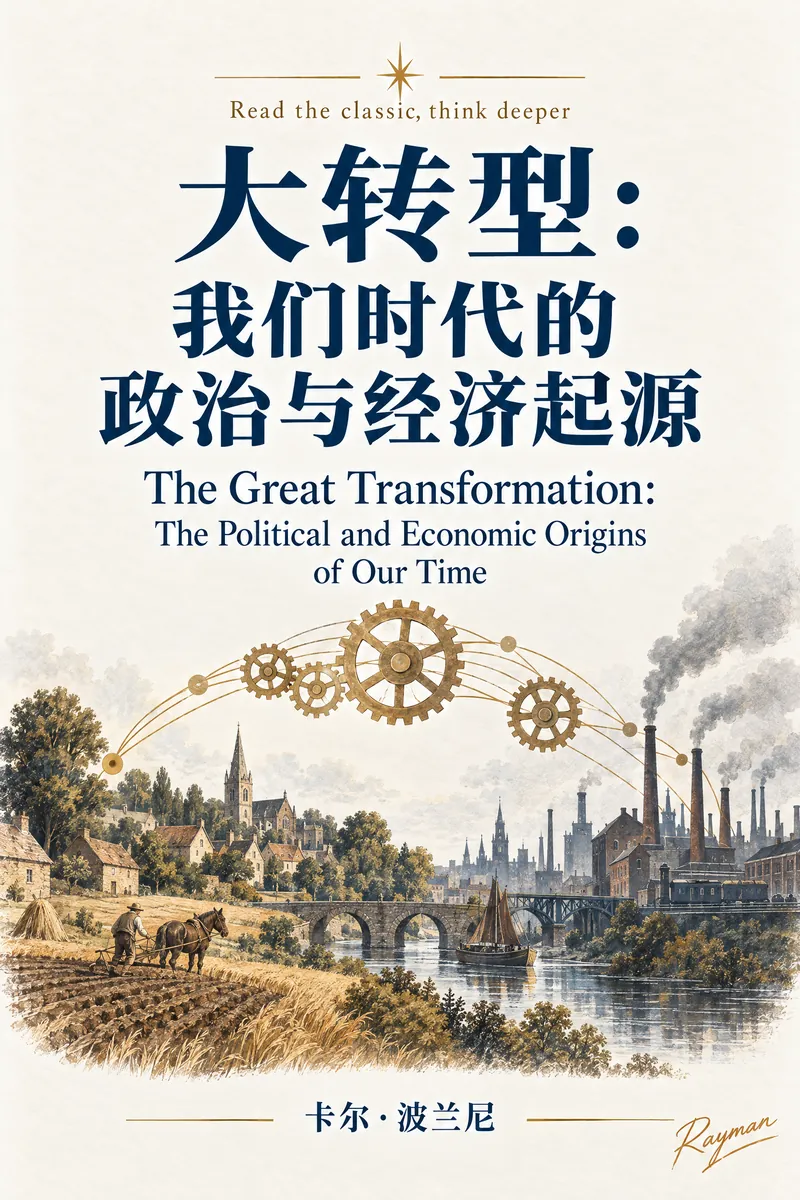
In The Great Transformation, Karl Polanyi offers not an efficiency argument but a judgement about boundaries. Labour, land and money, he argues, are not produced for sale; treating them uniformly as commodities is a fiction, and when markets try to disembed from social relations, societies push back with protective arrangements that keep prices out again. On this view, removing a price is frequently not a miscalculation but a collective answer to the question of what may become a commodity. Calling rationing a defect to be repaired erases that answer before the discussion starts.
A further layer resists the language of efficiency altogether: pricing changes the meaning of a thing, not merely the efficiency of its distribution. Once a place can be bought, what it expresses shifts from desert to ability to pay; what has been replaced is recognition, not a payment channel. Votes, organs and treatment free from humiliation are widely kept out of markets not because pricing them would produce queues, but because pricing them would make them something else.
Formal equality is not worthless either. A queue at least makes each person's hour equal before the rule, and prevents purchasing power from the previous round being carried into this one. For a group that has just been excluded by price, that is substantive. The full counter-case is therefore: removing price is often the result of correcting an earlier injustice, and its cost was accepted because another cost was judged less acceptable. Reading rationing only as an efficiency loss misses the problem it was meant to solve.
V. Limits: Blind Spots on Both Sides, and Why the Cost Stays Invisible
Both positions have blind spots that should be stated first.
The pure price position assumes that willingness to pay is a synonym for need. Ability to pay is the product of intensity of need and prior wealth; separating the two requires information that price itself does not supply. It also declines to admit that some meanings are rewritten by being priced. The pure anti-price position has a quieter blind spot: it treats "no money changes hands" as "no cost is incurred". Time, repeatedly assembled documents, uncertain waiting, being asked again and again to prove oneself — all occur in non-monetary form, fall on those least practised at complaining, and never reach a ledger.
A harder point follows: price is usually not eliminated but displaced. Paid placeholders, transferred eligibility, expediting fees and priority channels of every name are forbidden prices reappearing under another heading. When such channels settle at a stable, clearly positive price, the rationing cost is demonstrably real; it has simply been pushed outside the rules, where it cannot even be measured, let alone compared.
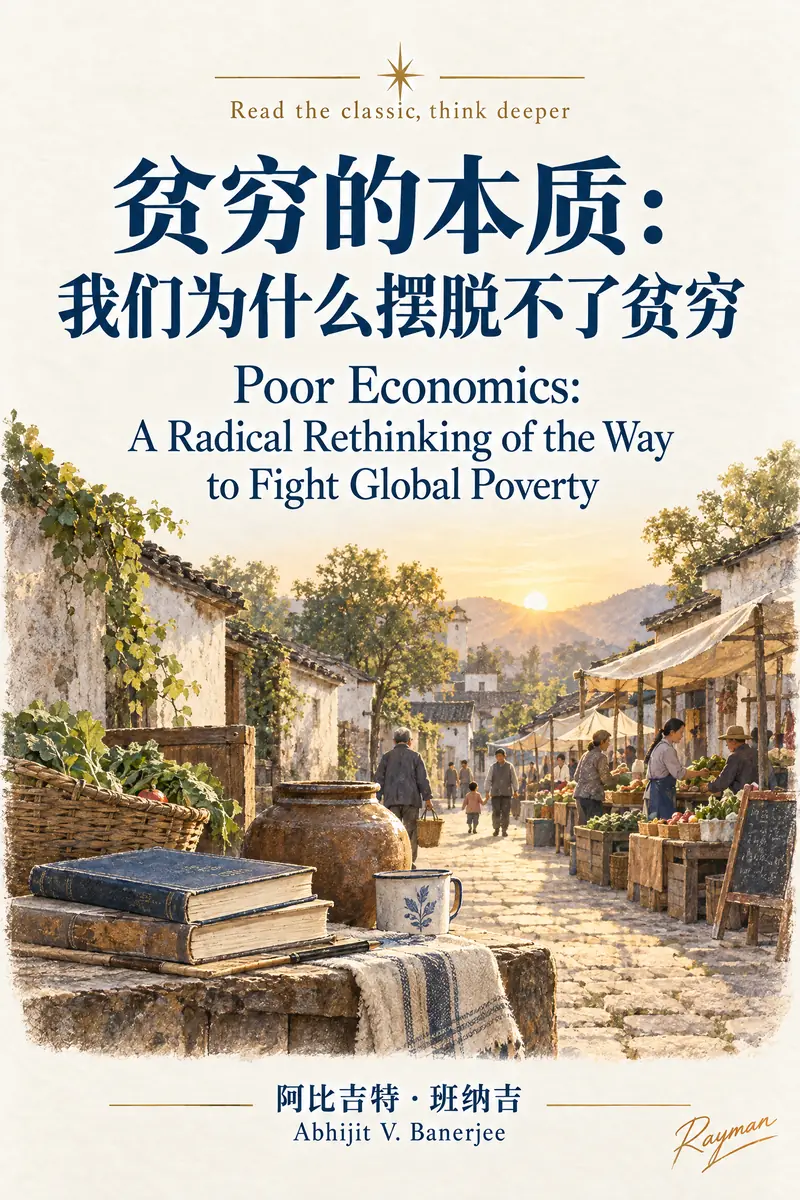
Measurement has its own limit. Waiting time is easy to clock; applications abandoned because the outcome felt uncertain, or attempts discontinued after several complete-but-unsuccessful files, are hard to record. What reaches the ledger tends to be the part that is easiest to count, so "no data" is regularly read as "no cost". Poor Economics offers a methodological reminder here rather than a ready conclusion: it turns "what people need" from a slogan into something that can be compared observationally, and rationing costs deserve the same treatment — first recorded, only then compared. Acknowledging that the record will be incomplete is closer to the truth than pretending the ledger is whole.
VI. Judgement: Enter the Rationing Cost in the Ledger
So the question is no longer whether to have a price. It becomes three questions.
First, who bears the cost, and is it recorded? If a scheme counts only how many units were distributed, and never how many hours applicants spent, how many rounds of documents they assembled, or how many times they were turned away, then the cost remains outside the ledger and any claim of "free" is a matter of accounting convention.
Second, can the substitute standard be contested and reviewed? A ballot offers no grounds, eligibility offers conditions that can be checked, connection offers almost no channel. Whether a channel exists matters more than whether a standard looks objective: a standard whose errors can be pointed out is more corrigible than a flawless one that cannot be appealed.
Third, is there an exit or a route to review? Can a person try again after one failure, and can the rule itself be revisited in the light of waiting data? Rationing without an entrance back in turns a single allocation into a lasting status, which is exactly the risk eligibility criteria have to guard against.
The three tests have limits of their own and should be written down with them: recording becomes a new burden of forms, contestation favours the articulate, and review can be used to defer indefinitely. They are therefore not a scorecard but three reminders. A price tag can be removed; a bill cannot. What can be done is to stop leaving it in the name of people who will not appeal, and at least bring it somewhere visible. Finding the bill is the only first step that does not depend on taking a side.