第二手的心智:为什么我们几乎从不亲自核实自己「知道」的事
You "know" the height of Everest, that the Earth orbits the Sun, that a war began in 1939 — and you verified none of it yourself. Testimony is not a cheap copy of knowledge; it is the protocol by which knowledge crosses individual lives. The question is not whether to trust others, but whether the chain can still be seen to fail
1. Almost Nothing You "Know" Was Verified by You
Begin with a simple question: you know Everest is about 8,849 metres high. How do you know?
Not because you measured it. You know the Earth orbits the Sun, though you have never observed it from outside. You know Germany invaded Poland in September 1939, though you were not there. You know penicillin kills bacteria, though you never ran that controlled trial yourself. Nearly everything you call knowledge was confirmed by someone else and then handed to you through language, classrooms, paper and screens.
Philosophers call this channel testimony: you believe a proposition not because you checked it, but because someone you trust — a person, an institution, a tradition, a text — told you it is true.
That is not strange in itself. What is strange is how rarely we admit it. We say "I know," not "I was told." Grammatically the two are close; epistemically they are different things. The first implies a personal verification we usually do not possess.
This essay is about that unexamined channel: why it is the foundation of civilisation, why it is also our deepest blind spot, and how we should live with it.
2. Secondhand Knowledge Is Not a Defect but Civilisation's Underlying Protocol
The reflex is to say: then trust only what you have verified yourself.
That sounds honest. It is impossible, and it is harmful.
No lifetime is long enough to redo even a fraction of one discipline. To earn the right to say "I know," you would have to measure the Earth's radius, re-derive the second law of thermodynamics, and audit every historical file in person. You would finish nothing and say nothing. Radical first-handism is not a position; it is a silence.
What lets humans accumulate knowledge is division of labour: some observe, some check, some write conclusions into transmissible form, and most inherit. That is not a degraded version of knowledge. It is how knowledge works.
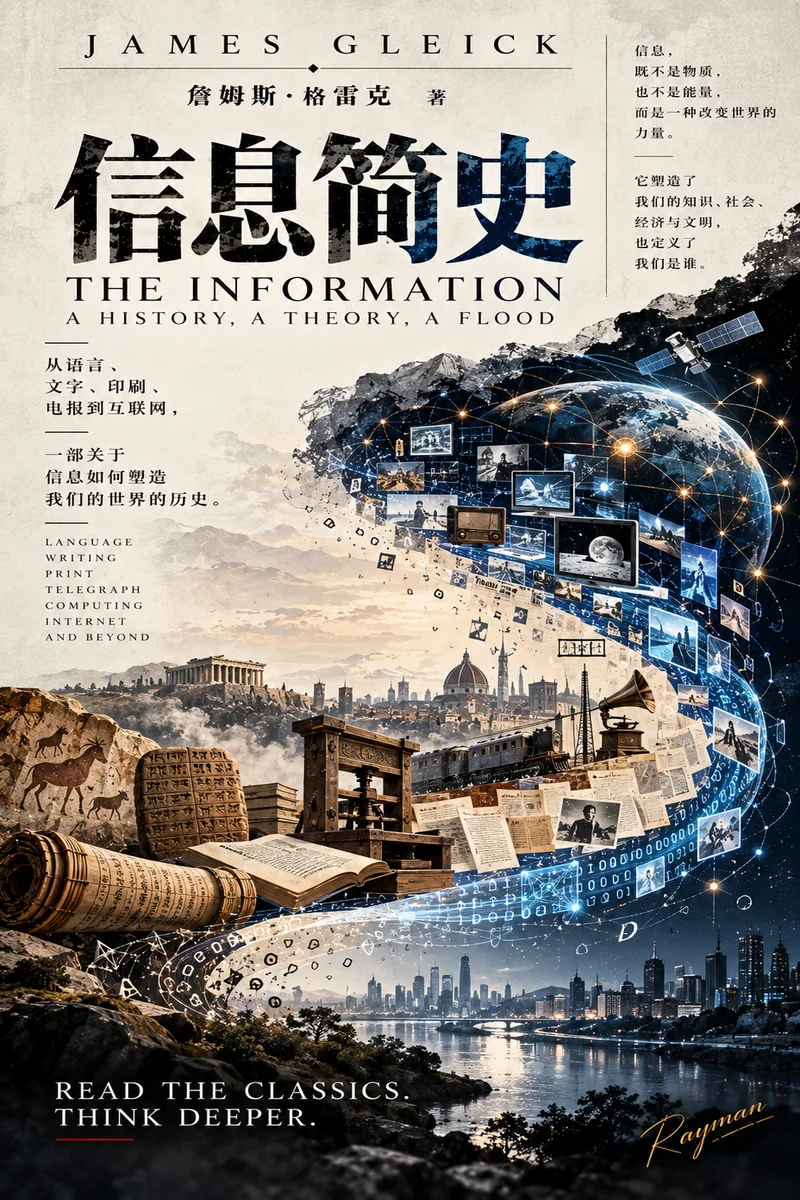
Shannon's 1948 paper "A Mathematical Theory of Communication" supplies a cool frame. Any message crossing a channel meets noise; the defence is redundancy and coding, not asking the receiver to regenerate the original signal. Put simply: once a message leaves its source it is secondhand. The question is never whether it is secondhand, but whether the channel is reliable and the redundancy sufficient.
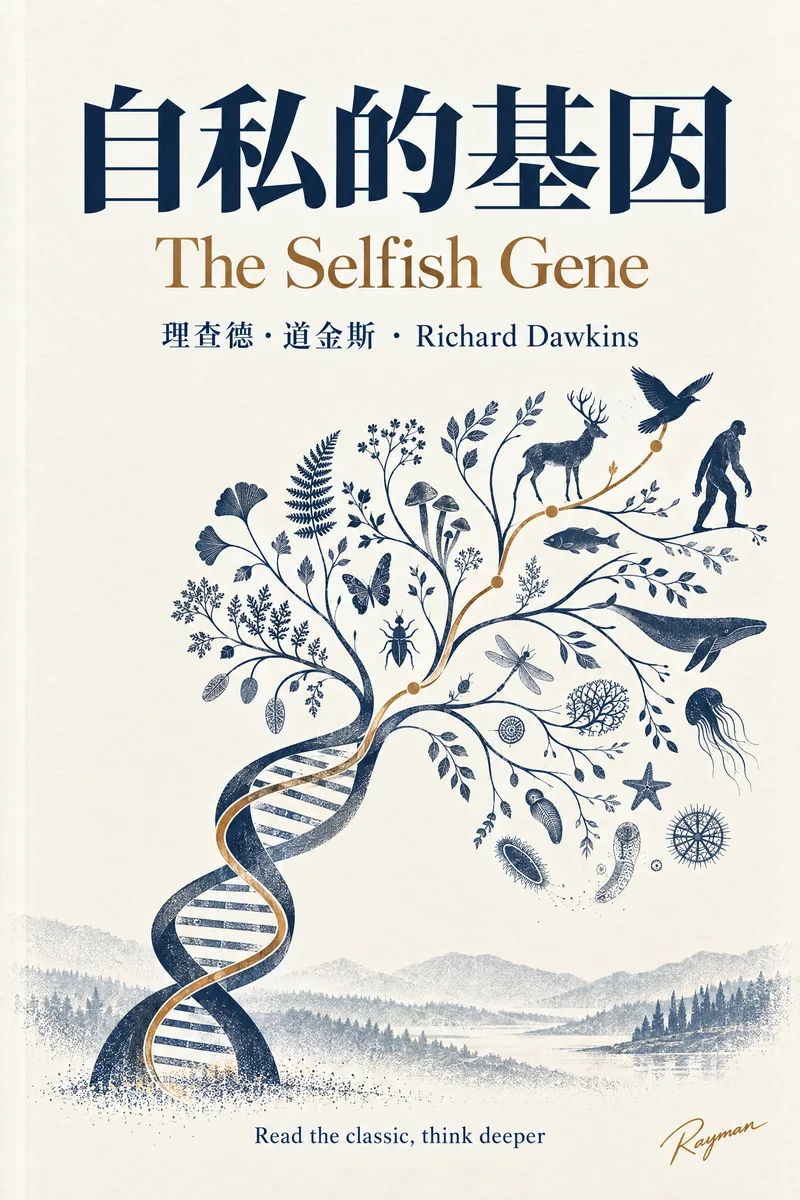
Dawkins moved the same structure into culture. In The Selfish Gene he proposed the meme — ideas, tunes and beliefs that replicate, mutate and are selected like genes. Culture is not something a person thinks up alone; it is a copying system. An idea spreads by imitation, and how well it spreads depends on whether it is easy to remember, retell and believe, not entirely on whether it is true.
Together these two lines say one thing: secondhandness is not a flaw in knowledge; it is the very channel by which knowledge crosses individual lives and generations.
3. The Cost: Error Travels Back Up the Same Chain
But the same channel that carries truth carries error, just as efficiently.
Judea Pearl's "ladder of causation" in The Book of Why gives a precise vocabulary. He sorts causal questions into three rungs: association at the bottom (what appears alongside what), intervention in the middle (what happens if I do X), and counterfactual at the top (what would have happened had I not done X). Where does most everyday "causal knowledge" sit?
At the bottom. What we inherit is other people's reported correlations — "the data show A and B move together" — while we rarely run the intervention ourselves and even more rarely reason about counterfactuals. We believe we are on the second rung; we have been on the first all along, using someone else's data.
This creates a structural risk: if one link upstream is wrong, the error travels down the same chain of trust and is inherited as fact. You do not need to make the mistake yourself. You only need to believe someone who did.
Hofstadter's Gödel, Escher, Bach adds a more abstract layer. A formal system does not generate meaning by itself; meaning comes from interpretation outside the system. A theorem, a formula, a verse of scripture is only a string of symbols until a mind reads it by some rule. Which means: meaning has to be re-interpreted at every link, and every interpretation is a chance to go wrong. Symbols can be copied perfectly; interpretations cannot.
So secondhand knowledge has a counterintuitive property. The more widely it is inherited, the harder it is to trace back to its source; and the harder it is to trace, the more it resembles "common knowledge" — and the less it seems to need evidence.
4. The Counterargument: Must Everything Be Verified Personally?
The sceptic will say: then trust only what you have seen with your own eyes.
That road is closed, as argued above. But there is a subtler objection worth taking seriously: even what you see is not necessarily reliable. Perception is contaminated by expectation, memory is rewritten by later narrative, and observation is theory-laden. So "firsthand" is not automatically truer than "secondhand." It merely has a different failure mode.
This is exactly the asymmetry the Stoics trained against in the Meditations. Marcus Aurelius keeps reminding himself that things do not disturb us by themselves; our judgements about them do. Impressions arrive, and we can choose whether to assent. The exercise targets precisely the most dangerous feature of secondhand information: it arrives fast, smooth and commonsensical, so fast that we never get to perform the act of assent at all.
Feynman tells a story in Surely You're Joking, Mr. Feynman! about what his father taught him. Pointing at a bird, his father said you could know its name in every language and still, when you finished, know nothing whatever about the bird. A name is a label you can acquire secondhand; knowledge of the bird requires looking, asking and handling.
The distinction matters because it moves the question from "firsthand versus secondhand" to "label versus understanding." Secondhand knowledge is not the problem; mistaking a label for understanding is. A person can memorise every term in economics and have no judgement about a real inflation; another can have never built a chip and genuinely understand why lithography is hard. The difference is not the source of information but whether you can turn it into something usable when it counts.
5. The Judgement: The Problem Is Not Dependence but the Design of the Pipeline
Pulling the threads together, the conclusion can be short: we cannot avoid depending on secondhand knowledge, so the real question is not whether to believe but how to make the pipeline detectable and correctable when it errs.
This is an engineering problem more than a moral one. A healthy epistemic order needs at least three conditions.
- Redundancy. A single source's point of failure can only be hedged by independent sources. When two unaffiliated channels report the same event, the survival rate of an error falls; with only one channel, the error becomes the only version. Shannon's frame still applies: noise is fought with repetition and coding, not with faith that the channel will not fail.
- A channel for dissent. Whether a system can correct itself depends on whether anyone has the right to say the emperor has no clothes. This is not a matter of politeness but of structure: if pointing out an error is too costly, errors are systematically retained. Many historical disasters were not unseen; the people who saw them had no standing to speak.
- Labelling the source of a belief. This is the cheapest and most neglected rule. Separating "I know" from "I was told," and "I checked" from "I heard," is a trainable habit. It does not demand that you doubt everything; it asks only that when you use a piece of information, you know which hand it came from.
None of this is new, but all of it points to one judgement: the secondhand mind is not a bug to be fixed but an architecture to be maintained. Its strength comes from division of labour and inheritance; its fragility comes from the same place. The longer the chain, the harder the single point is to see; the smoother the transmission, the harder correction is to start.
So the thing to fear is not that we rely on others to tell us what is true. It is that we forget we are relying — and mistake "being told" for "knowing." The first is the normal condition of civilisation. The second is the first signal that it is starting to fail.