当利益变成一种激情:一个四百年前的社会设计,以及它没做完的那一半
The intellectual starting point of modern capitalism was not the invisible hand, but an earlier redefinition: the pursuit of gain, recast from a vice into a counterweight to destructiveness
A Design That Has Been Forgotten
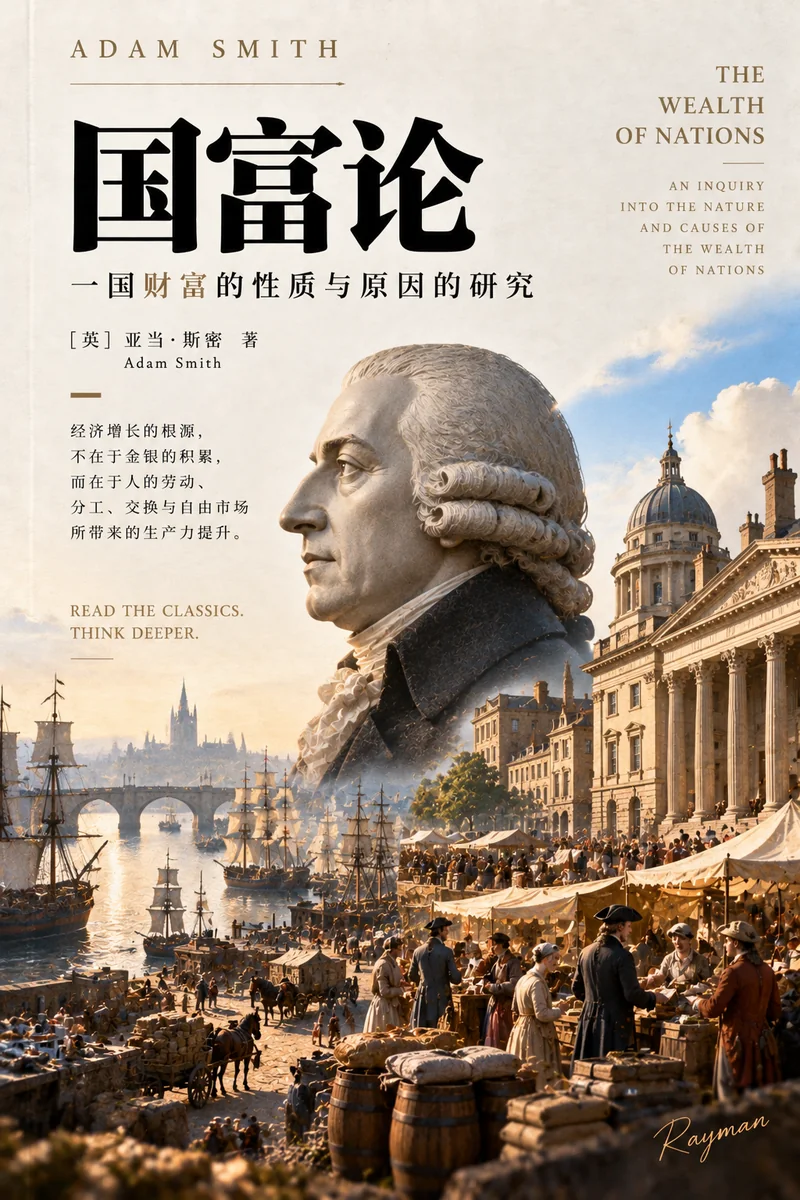
There is a popular account of how modern capitalism was thought into existence: Adam Smith discovered the invisible hand, and from that moment the pursuit of private interest, guided by competition, automatically turned itself into the public good. The chronology alone makes this account impossible. Smith's The Wealth of Nations appeared in 1776; a century and a half earlier, European thinkers were already searching for an answer to a far more stubborn problem: what to do about humanity's destructive passions.
The difficulty was real and urgent. For more than a century after the Reformation, exhortation, preaching and moral instruction took their turns on the stage, stopped no wars whatsoever, and if anything endowed the killing with the colouring of salvation. As Albert Hirschman shows in The Passions and the Interests, the adjustment that followed this string of failures was not the "discovery" of self-interest — self-interest never needed discovering — but a reclassification: the pursuit of material gain, previously a vice to be extirpated, was rewritten as a counterweight that could be set against the other passions.
The logic was homeopathic: if the passions cannot be suppressed, use a comparatively mild one to cancel out the violent ones. Montesquieu gave the thesis its most famous formulation in The Spirit of the Laws — commerce softens barbarous manners; James Steuart wrote its most systematic version in his 1767 Inquiry into the Principles of Political Oeconomy, advising princes to treat their subjects' profit-seeking instinct not as an opponent but as a lever. Smith's invisible hand was the last and most daring step in the lineage: the prince is no longer required at all, since competition itself becomes the countervailing force.
Why the Design Was Elegant
The elegance of the design lies in what it does not ask for. It demands no improvement in human beings. It is a mechanism that cooperates with human nature rather than fighting it, and it substitutes three very concrete properties for moral sermonising.
- Predictability. A prince pursuing glory may start a war over an insult; a merchant pursuing profit responds to prices. Interests can be modelled; passions cannot.
- Divisibility. Glory is exclusive — there can be only one king of a country; profit is not — two merchants can both win. Divisibility implies a non-zero-sum game, and a non-zero-sum game means that bargaining can replace conquest.
- Portability. Economic interest crosses borders naturally, whereas honour and faith draw them. Commerce turns strangers into counterparties who need each other alive.
From where we stand, the reasoning can look merely optimistic. But it was not absurd in its own time: the centuries of commercial expansion were also the centuries in which European states gradually stopped fighting wars of religion and built up their diplomatic and credit systems. Interest did displace zero-sum status competition in many domains — that was the design's stated goal, and it was partly achieved.
The Counterargument: It Tamed the Old Passions and Made a New One
From its first day, however, the design carried a gap it never noticed in itself: the instrument used to counterbalance the passions was treated as though it were not one of them.
Hirschman himself records the reversal. He shows that during the nineteenth century the distinction between "the passions" and "the interests" quietly vanished from political economy, replaced by a coarser and more convenient assumption: everyone is self-interested. The design's claim that interests counteract the passions was silently swapped for the mere observation that everyone is self-interested anyway. Once the distinction went, the counterweight went with it — if profit-seeking is simply the human baseline, it no longer needs constraining; it is accepted as a parameter.
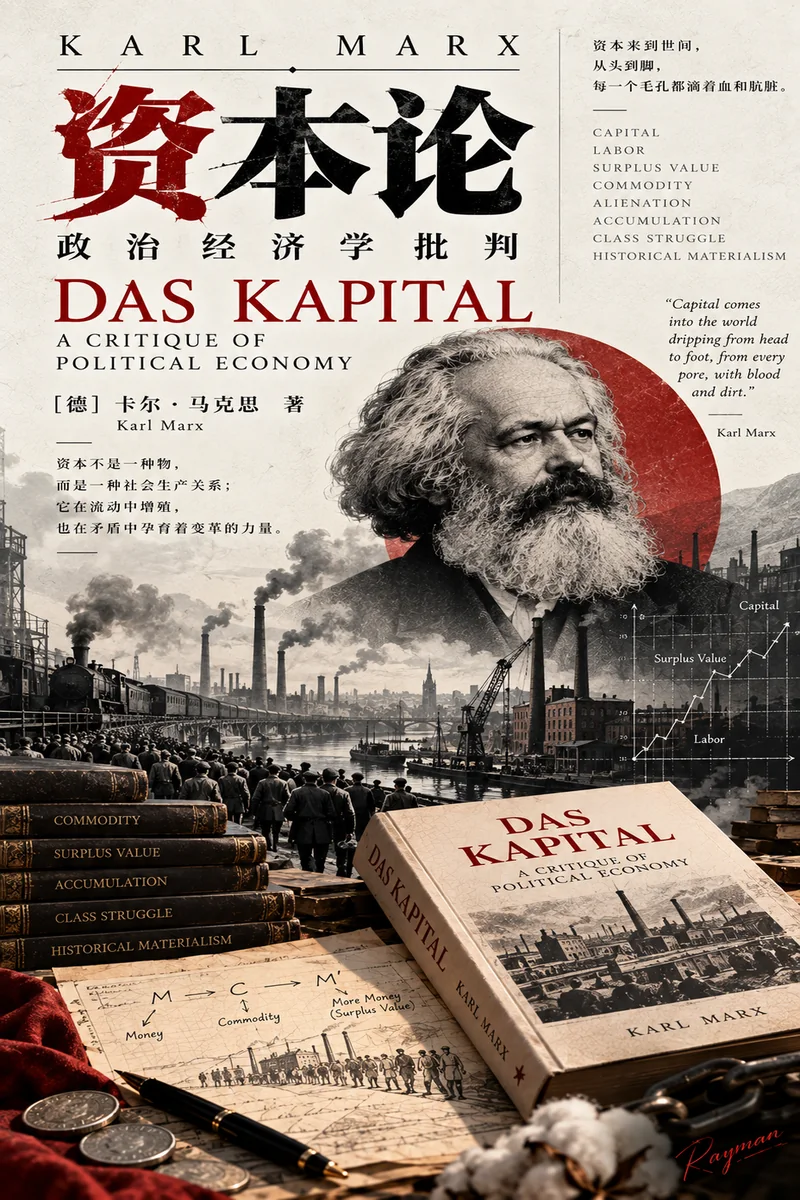
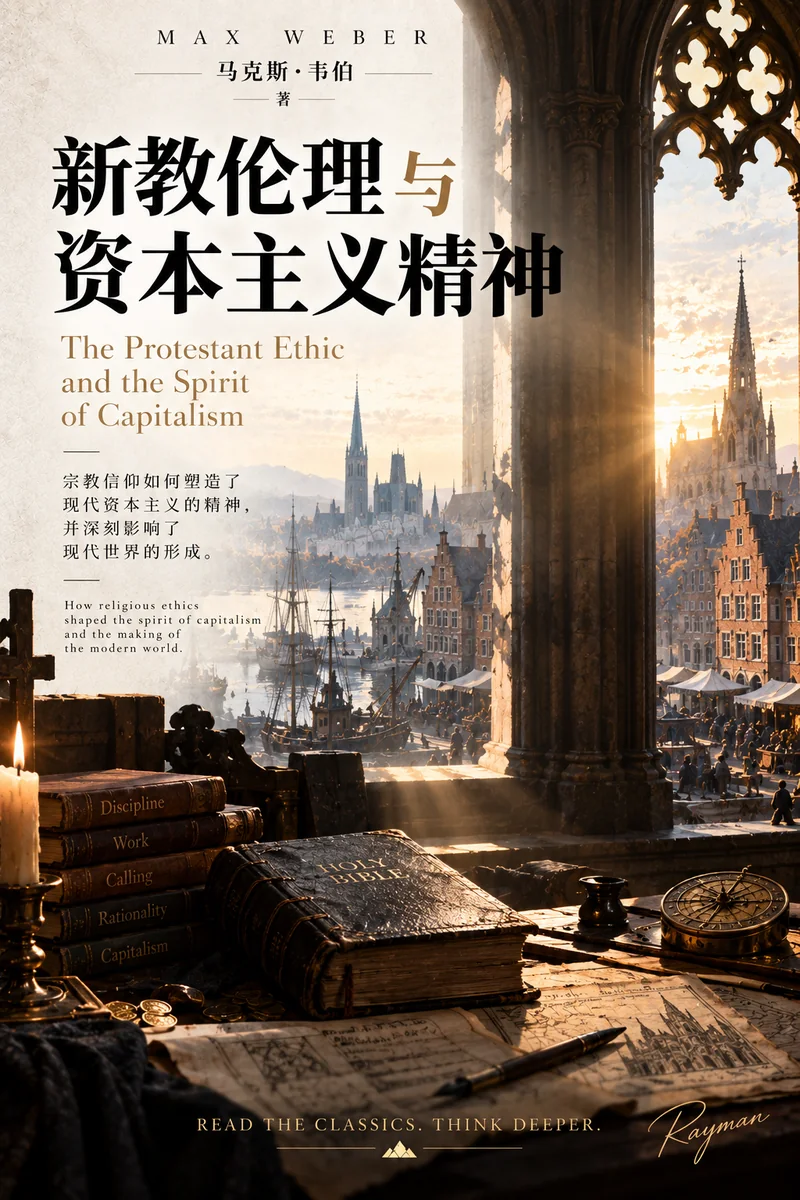
Marx put a sharp finger on the consequence in the first volume of Capital: "Accumulate, accumulate! That is Moses and the prophets!" The point is not that capitalists are greedier than other people, but that competition turns expansion into compulsion — fail to expand and you are absorbed. The motive that was supposed to be mild thus acquired every feature of a violent passion: it cannot be satisfied, it will not be bargained with, and it presupposes the defeat of others. Weber reached the same diagnosis from the opposite side in The Protestant Ethic and the Spirit of Capitalism: the discipline that Protestants maintained as evidence of grace survived the disappearance of its religious container and became an end in itself; the pursuit of wealth served no transcendent purpose any longer and hardened into an "iron cage."
The scheme, in other words, did not stop working. It finished only half the job: it locked the old violent passions inside a cage of interest, and then let the cage itself out.
The Data Counterargument: It Did Not Even Deliver Its Promise
"Commerce softens manners" carried a second promise as well: that economic growth would naturally produce general wellbeing. Thomas Piketty's Capital in the Twenty-First Century is a data-level refutation of exactly that layer. His central inequality, r > g — the rate of return on capital persistently exceeding the rate of economic growth — points to one conclusion: an unrestrained market systematically concentrates wealth in few hands, because existing capital appreciates faster than overall output grows over the long run. He remains appropriately careful, stating explicitly that this should be read as a historical fact rather than a logical necessity.
And the twentieth century usually cited as evidence that capitalism produces equality was not the spontaneous product of commerce at all. Two world wars and the Great Depression destroyed vast quantities of existing capital, which is what produced that brief flattening; the progressive taxes and social policies that followed were political choices, not market mechanisms. Piketty makes this impossible to dodge: a laissez-faire commercial order does not converge on equality by itself; its equilibrium is hereditary capitalism.
Karl Polanyi added a third blow from the institutional side in The Great Transformation. A self-regulating market, he argued, must price land, labour and money as commodities, and these three are not commodities in any essential sense — they are not things produced in order to be consumed. An order that runs purely on the logic of interest will therefore periodically tear apart the social base on which it depends, and society's self-protection — unions, welfare, exchange controls — is not an outside interference but an integral component of the system. Polanyi's "double movement" implies that an interest-driven order is not self-stabilising: it requires continuous political maintenance.
Even the evidence on declining violence may be misattributed. In The Goodness Paradox, the primatologist Richard Wrangham distinguishes reactive from proactive aggression and proposes that humans are a "self-domesticated" species: the collective execution of aggressive individuals by early human groups selected away short tempers over a span of hundreds of thousands of years. This remains a contested hypothesis, but it raises a fatal problem of attribution — if a low propensity for violence was already in place hundreds of thousands of years before commerce existed, then "commerce softened humanity" is a matter of crediting one account with another's earnings.
The Verdict: The Design Did Not Fail — It Was Left Half Finished
Should the design, then, be judged a failure? No. The more accurate verdict is that it did not fail; it succeeded at its original task and was then trapped by a category error.
The category error consisted in treating the pursuit of gain as the opposite of a passion, when it is in fact a passion that keeps better books. Every passion wants to accumulate, fears loss, and escalates in the face of competition — interest is no exception. A design that assumes its own counterweight has no weight is bound to underestimate the pressure on the other side of the scale.
That verdict yields a practical implication. What Hirschman's scheme really taught was not "introduce interests" but "set one passion against another." Since profit-seeking is itself a passion, it requires a counterweight of its own. Polanyi's self-protection of society and Piketty's progressive capital taxation, in this reading, are not betrayals of capitalism but continuations of the design — they complete the step that the nineteenth century skipped.
The implication needs a limit, though. The counterweight cannot simply be another interest: setting profit against profit only escalates the competition. Every commercial society therefore ends up having to re-import non-market commitments — professional ethics, public goods, a ceiling on tolerable inequality. Smith understood this better than many of his later admirers; before The Wealth of Nations he wrote The Theory of Moral Sentiments, grounding morality in sympathy rather than interest. A good market is one continuously constrained by something that is not a market.