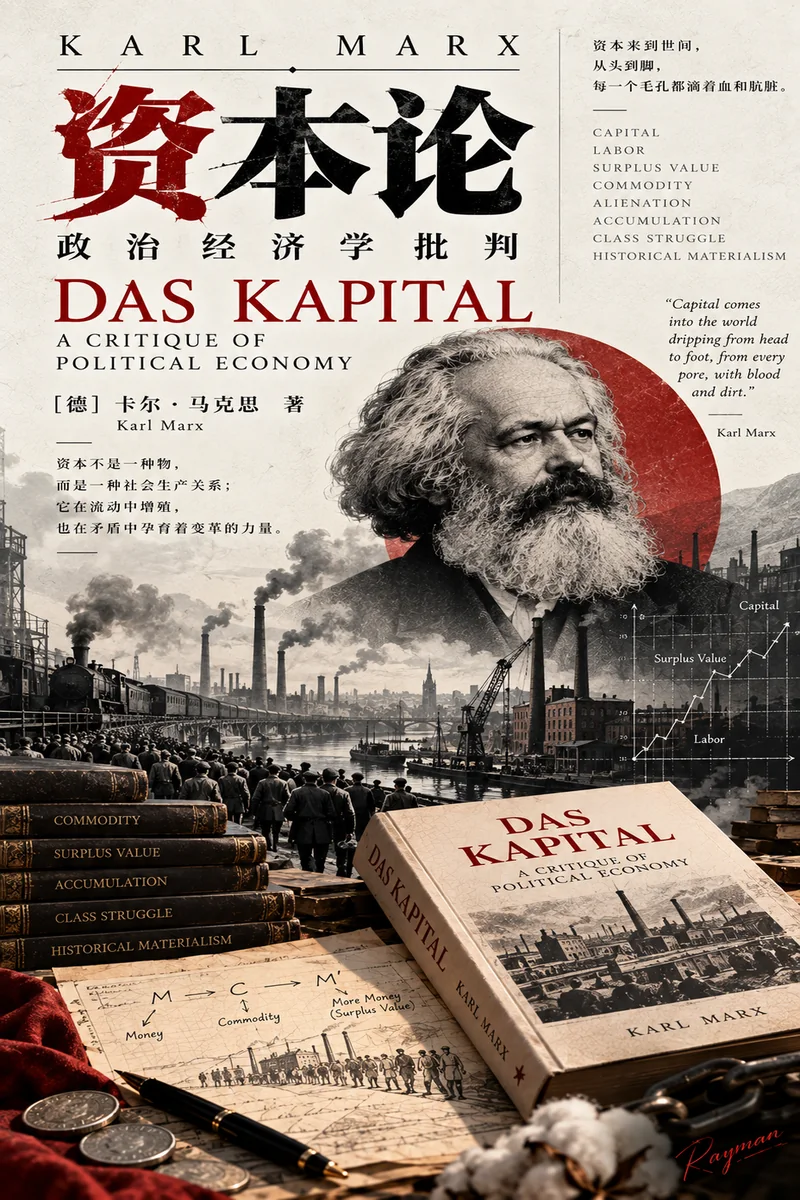
Economics 1867
Capital
《资本论》
A Critique of Political Economy
- Published
- 1867
- Category
- Economics
- Difficulty
- Advanced
- Reading time
- ~45 hours
- Original language
- de
The Classic Index is not an objective scientific measure. It is this site's personal curation score.
What is this book about?
Marx builds on the labour theory of value to develop concepts such as surplus value, capital accumulation, and commodity fetishism, in an attempt to show the internal contradictions and historical character of the capitalist mode of production. Economic categories are analysed as expressions of social relations rather than natural facts.
Why read it?
Whether or not one accepts its conclusions, the questions it poses — where value comes from, what drives accumulation, how economic categories conceal social relations — shaped a century and a half of social science and political thought. Reading it clarifies where contemporary arguments about inequality, labour, and crisis come from.
Core Ideas
- A commodity has both use value and exchange value, and in Marx’s analysis the ratio of exchange is determined by socially necessary labour time.
- Surplus value arises because labour creates more value than the cost of reproducing itself, and this is the source of accumulation.
- Accumulation is accompanied by a rising organic composition of capital and a tendency for the rate of profit to fall — a thesis long contested among economists.
- Commodity fetishism names the habit of mistaking social relations for natural properties of things.
What questions does this book try to answer?
- Where does value come from, and can it be reduced to labour?
- What drives capital accumulation, and what limits it internally?
Who should read it?
For readers interested in the history of social theory and political economy. Volume One is relatively self-contained; Volumes Two and Three are more technical and reward reading alongside secondary literature.
Related Books
If you like this book
 An Inquiry into the Nature and Causes of the Wealth of Nations
《国富论》
Economics
Classic Index 97
An Inquiry into the Nature and Causes of the Wealth of Nations
《国富论》
Economics
Classic Index 97
 The Great Transformation
《大转型》
Economics
Classic Index 90
The Great Transformation
《大转型》
Economics
Classic Index 90
 Capital in the Twenty-First Century
《21 世纪资本论》
Economics
Classic Index 88
Capital in the Twenty-First Century
《21 世纪资本论》
Economics
Classic Index 88
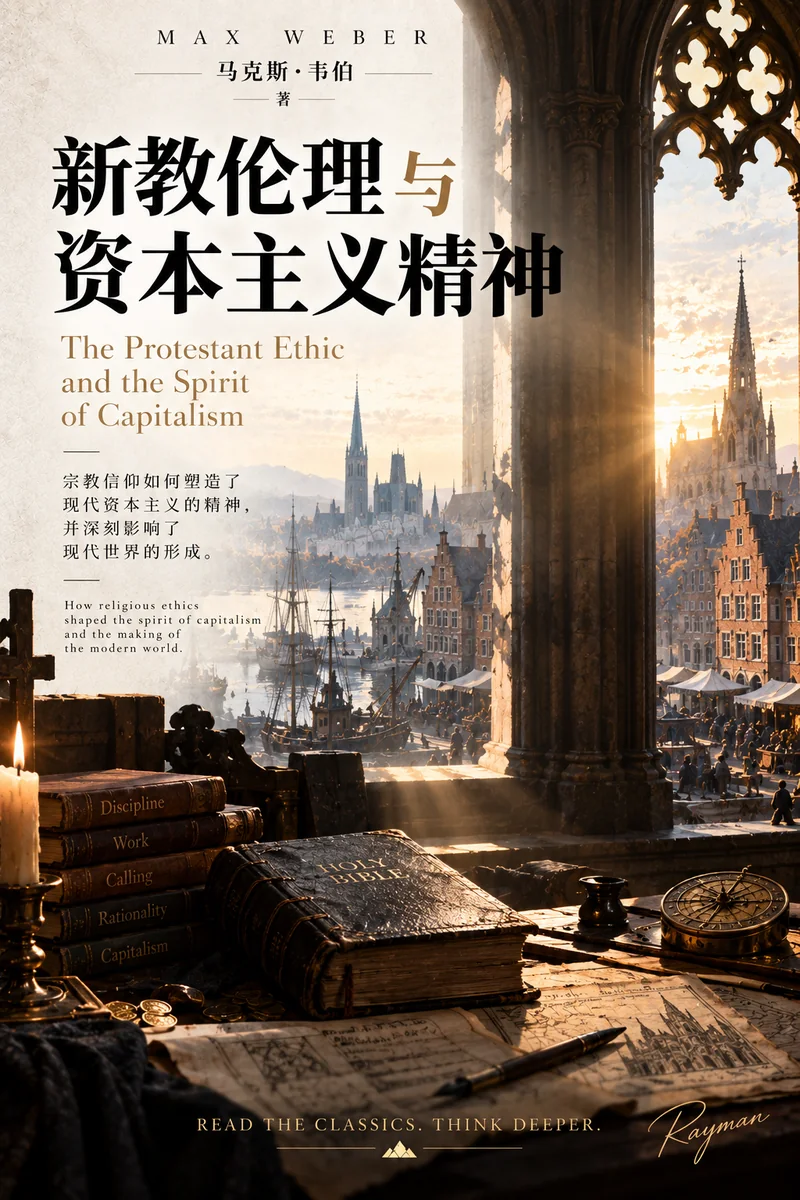 The Protestant Ethic and the Spirit of Capitalism
《新教伦理与资本主义精神》
Society & Civilization
Classic Index 94
The Protestant Ethic and the Spirit of Capitalism
《新教伦理与资本主义精神》
Society & Civilization
Classic Index 94