Business 1980
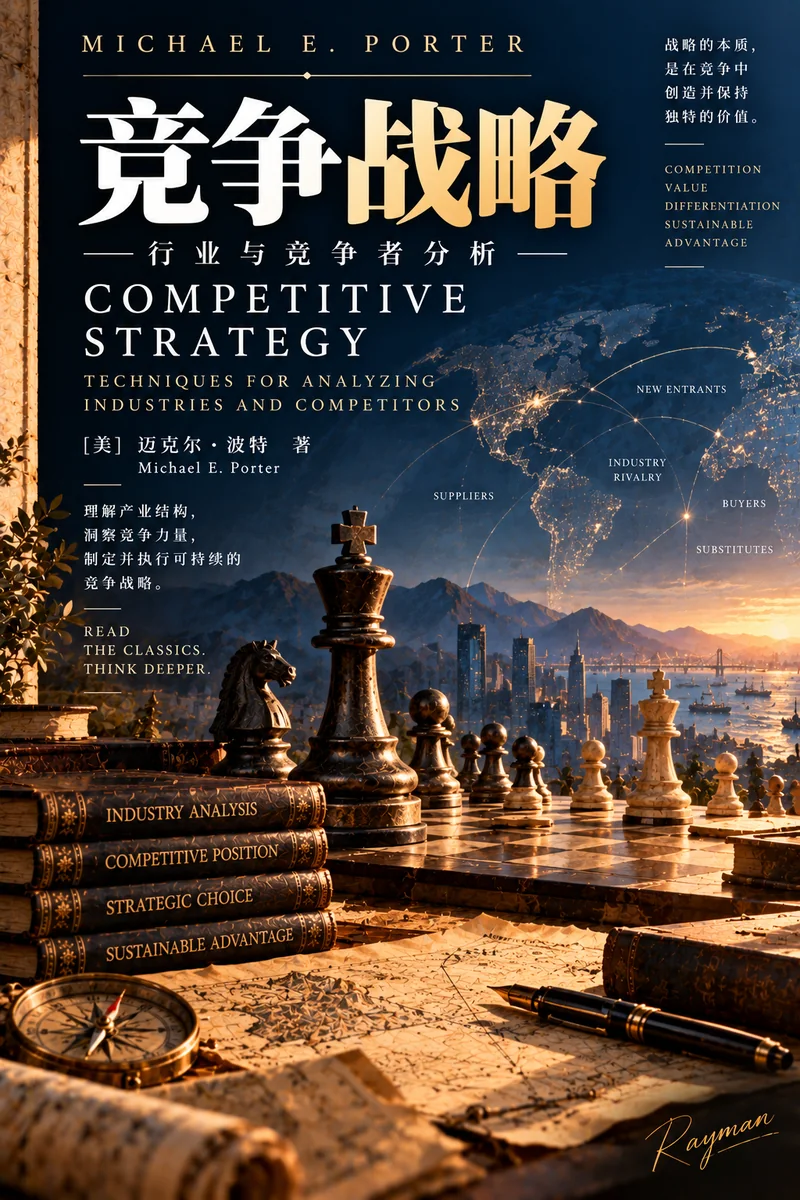
Competitive Strategy
《竞争战略》
Techniques for Analyzing Industries and Competitors
- Published
- 1980
- Category
- Business
- Difficulty
- Advanced
- Reading time
- ~14 hours
- Original language
- en
The Classic Index is not an objective scientific measure. It is this site's personal curation score.
What is this book about?
Porter builds a systematic framework for analyzing industry structure and competitive position, centered on the five forces that determine profitability and on three generic strategies. It converted strategy from anecdote into structural analysis.
Why read it?
The five-forces frame is still used to diagnose why some industries are persistently more profitable than others, a diagnostic that serves investors and managers alike. Its limitations in fast-changing, platform-based industries are instructive for the same reason.
Core Ideas
- Industry profitability is determined by structure: rivalry, entrants, substitutes, supplier power, and buyer power.
- A firm must choose a clear generic strategy — cost leadership, differentiation, or focus — or risk being stuck in the middle.
- Competitive advantage comes from specific activities along the value chain, not from vague strengths.
- Structure can be shaped, not merely accepted.
What questions does this book try to answer?
- Why are some industries persistently more profitable than others?
- What allows a firm to defend its position?
Who should read it?
For practitioners in strategy, investing, and management. Some grounding in industrial economics helps, or the five forces degenerate into a memorized checklist.
Related Books
If you like this book