Investment 1991
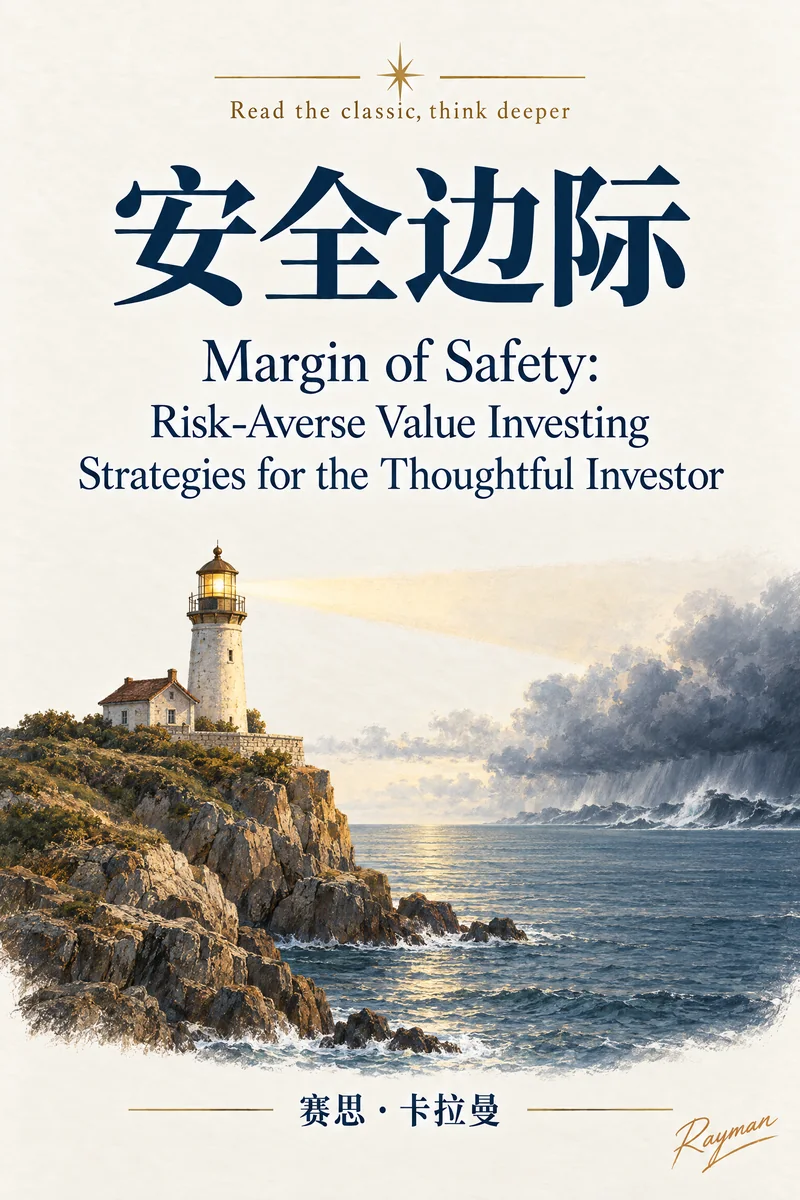
Margin of Safety
《安全边际》
Risk-Averse Value Investing Strategies for the Thoughtful Investor
- Published
- 1991
- Category
- Investment
- Difficulty
- Advanced
- Reading time
- ~14 hours
- Original language
- en
The Classic Index is not an objective scientific measure. It is this site's personal curation score.
What is this book about?
Klarman starts from the priority of avoiding loss over pursuing gain, argues that value investing is the most logically sound approach, and explains why institutional incentives, short-term performance pressure, and psychological bias keep it effective yet hard to practise at scale.
Why read it?
It is one of the few books that explains why value investing works as a problem of incentives: excess returns persist because most capital is structurally barred from the strategy. That lens outlasts any stock-picking technique.
Core Ideas
- The first objective is to avoid permanent loss; returns are a by-product of that discipline.
- Value investing works precisely because institutional constraints and human weakness make it hard to run at scale.
- Margin of safety must rest on conservative valuation assumptions, not optimistic growth expectations.
- At market extremes, holding cash and waiting is itself an active decision.
What questions does this book try to answer?
- Why has a logically sound strategy not been arbitraged away?
- How can one hold a view contrary to short-term performance under institutional pressure?
Who should read it?
For readers with some financial grounding who want the logic behind value investing. The book has long been out of print and is usually found through libraries or reprints.
Related Books
If you like this book