Psychology & Cognitive Science 2006
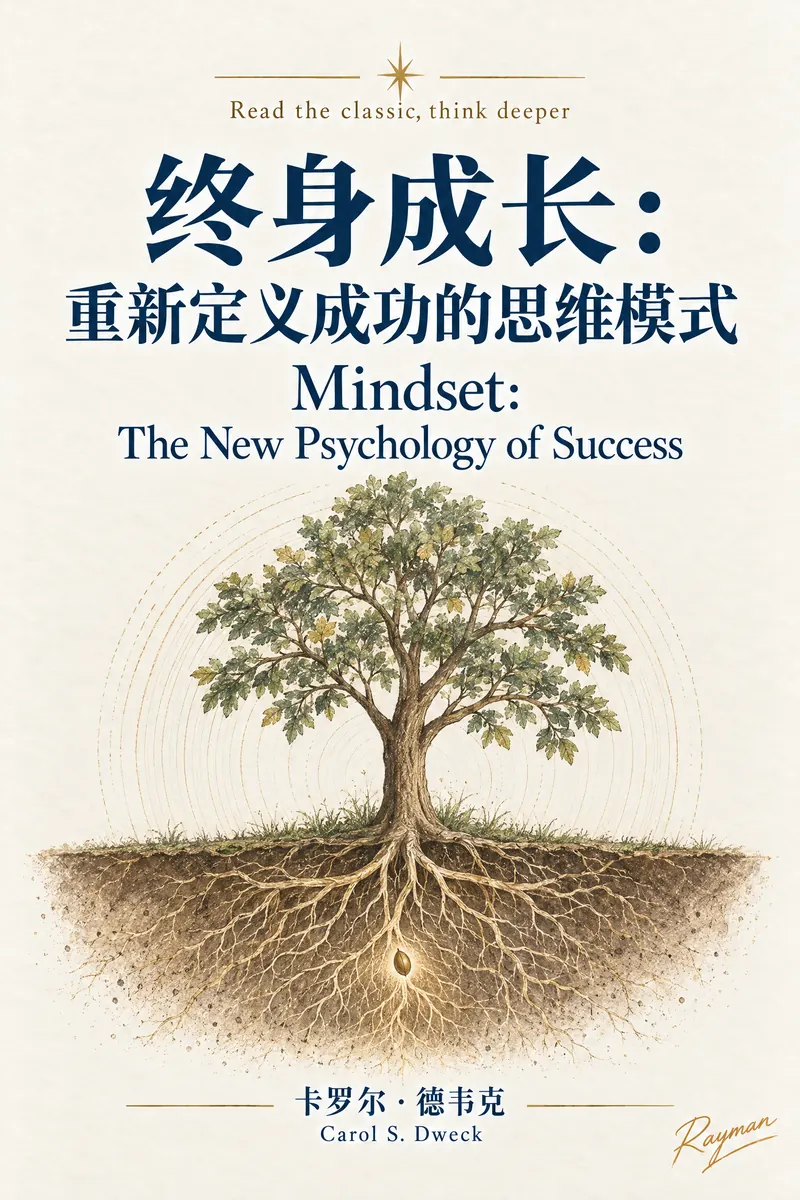
Mindset
《终身成长》
The New Psychology of Success
- Published
- 2006
- Category
- Psychology & Cognitive Science
- Difficulty
- Beginner
- Reading time
- ~9 hours
- Original language
- en
The Classic Index is not an objective scientific measure. It is this site's personal curation score.
What is this book about?
Dweck distinguishes a fixed mindset, which treats ability as a given trait, from a growth mindset, which treats ability as developable through effort and strategy. Using experiments and classroom cases, she shows how this difference in belief shapes how people face failure, choose challenges, and interpret effort.
Why read it?
It isolates a small but far-reaching variable: what a person believes about whether ability can change. In education, management, and self-assessment alike, that belief changes how failure gets interpreted.
Core Ideas
- A fixed mindset leads people to avoid challenges they might fail, because failure reads as a verdict on their ability.
- A growth mindset recasts failure as information, shifting attention to whether the strategy needs changing rather than whether the self is diminished.
- Praising ability and praising effort have different consequences: the former reinforces a fixed mindset, the latter encourages continued attempts.
- Mindsets are not themselves fixed — the same person can hold different beliefs in different domains.
What questions does this book try to answer?
- How does a belief about the malleability of ability affect long-term performance?
- What should educators and managers praise in order to foster sustained engagement?
Who should read it?
For teachers, parents, managers, and anyone who has placed limits on their own ability; the experiments are told accessibly, though the argument repeats itself and asks the reader to sift.
Related Books
If you like this book