Economics 1944
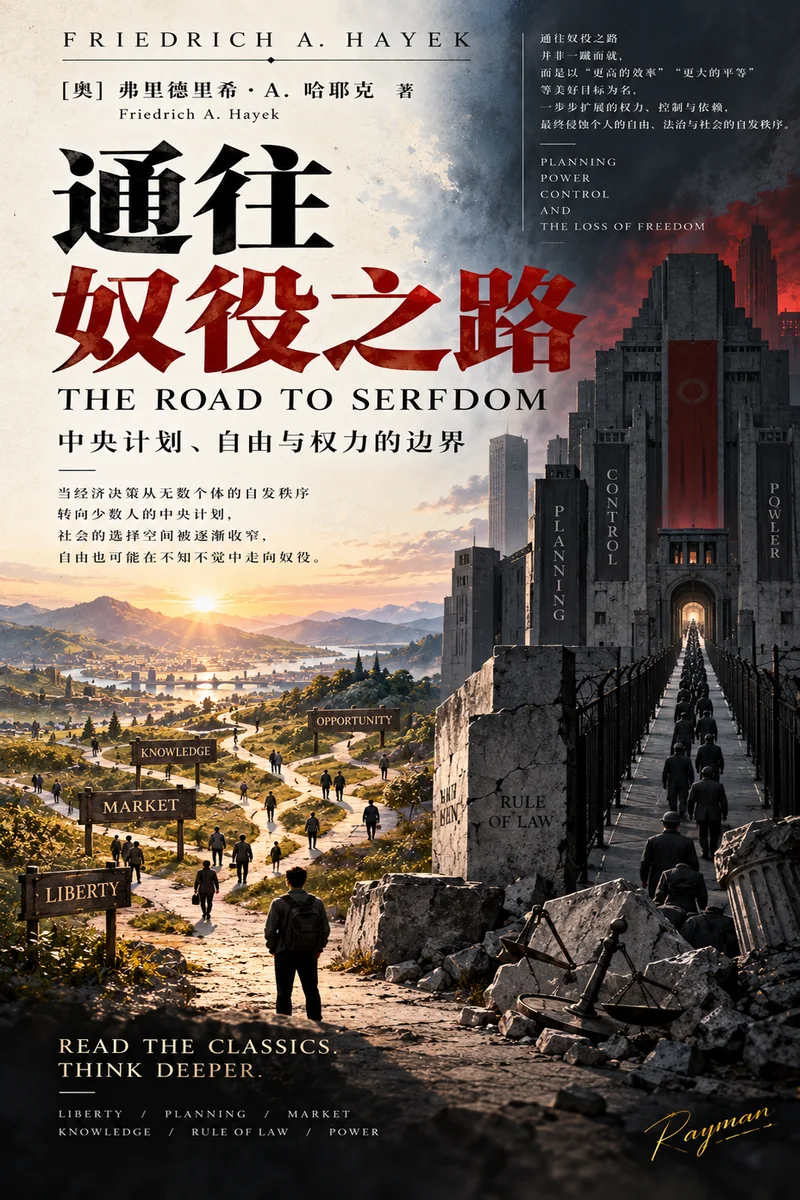
The Road to Serfdom
《通往奴役之路》
- Published
- 1944
- Category
- Economics
- Difficulty
- Advanced
- Reading time
- ~12 hours
- Original language
- en
The Classic Index is not an objective scientific measure. It is this site's personal curation score.
What is this book about?
Written during the Second World War, Hayek argues that once central planning becomes the primary means of allocating resources it progressively erodes the rule of law and individual freedom, since planning requires a single ranking of conflicting ends that a society does not share. The book was widely influential and has been criticized at length by economists and historians.
Why read it?
It poses one of the central disputes of twentieth-century political economy: whether planning and liberty can coexist over the long run. Understanding the structure of the argument — and the rebuttals to it — is necessary for making sense of postwar Western politics.
Core Ideas
- Central planning requires a single ranking of conflicting ends, and no such ranking arises spontaneously from dispersed individual preferences.
- Concentrated economic control tends to spread into speech, occupation, and education, restricting freedom across the board.
- The rule of law requires general and predictable rules, whereas planning tends toward case-by-case exceptions.
- The book was written in a specific historical situation, and the scope and empirical basis of its argument have remained a subject of scholarly dispute.
What questions does this book try to answer?
- Is there a necessary conflict between economic planning and individual liberty?
- To what extent can social ends be ranked in common without damaging plural values?
Who should read it?
For readers interested in political philosophy and twentieth-century intellectual history. Reading it against Polanyi’s The Great Transformation shows a contemporaneous alternative line of argument.
Related Books
If you like this book