Investment 1973
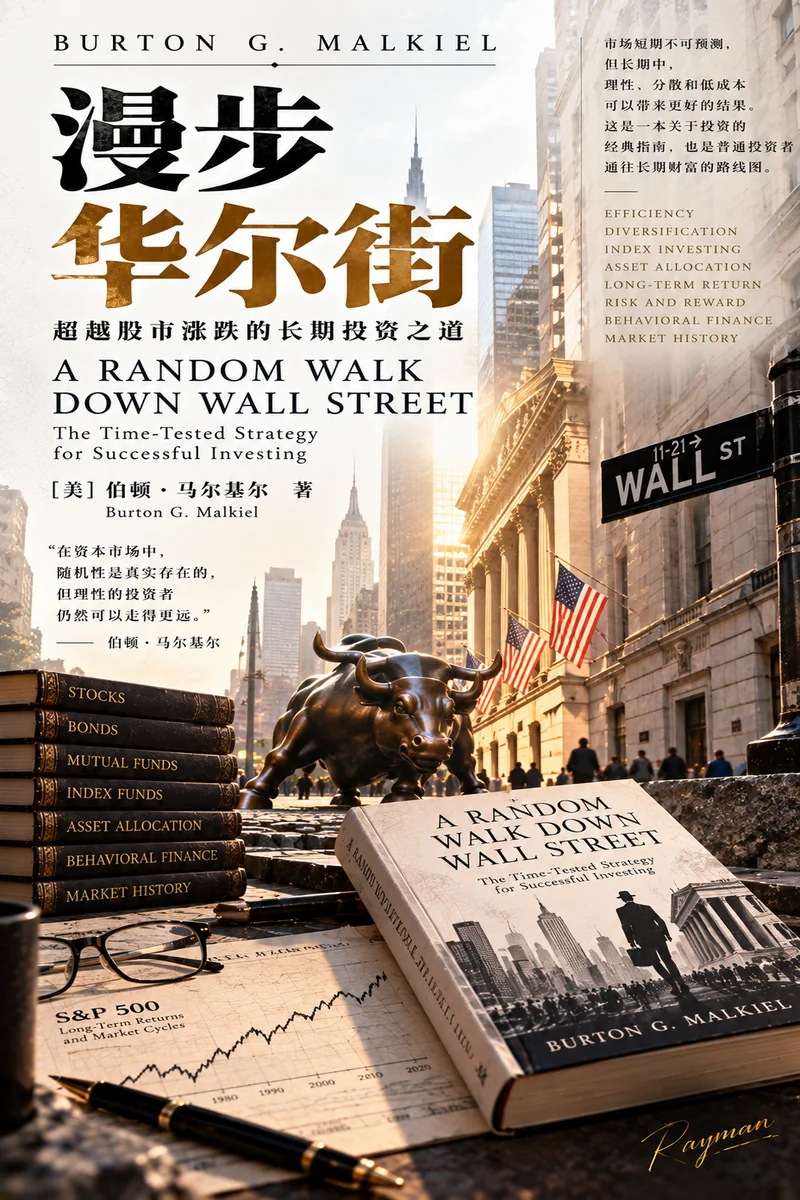
A Random Walk Down Wall Street
《漫步华尔街》
- Published
- 1973
- Category
- Investment
- Difficulty
- Intermediate
- Reading time
- ~14 hours
- Original language
- en
The Classic Index is not an objective scientific measure. It is this site's personal curation score.
What is this book about?
Malkiel uses the efficient-market hypothesis and random-walk theory to argue that most active managers cannot beat the market consistently, which makes low-cost indexing and long-term asset allocation the more reliable path for individuals — while acknowledging the irrationality behavioural finance documents.
Why read it?
It is the clearest theoretical case for passive investing and a sober answer to the question “can I beat the market?” Even if you end up investing actively, you should know what you are competing against.
Core Ideas
- Prices approximate a random walk in the short run; past price patterns provide no reliable basis for forecasting.
- Most active funds underperform their benchmark over the long run after fees, and fees are the one certain negative return.
- Indexing is not an abdication of judgment but an admission that market consensus is hard to beat consistently.
- Allocation should track age and risk tolerance, not market mood.
What questions does this book try to answer?
- Can an individual investor beat the market consistently?
- If prices cannot be forecast, on what basis should assets be allocated?
Who should read it?
For readers starting to build an investment framework, and a good entry point to the indexing debate. No mathematical background required.
Related Books
If you like this book