Psychology & Cognitive Science 2020
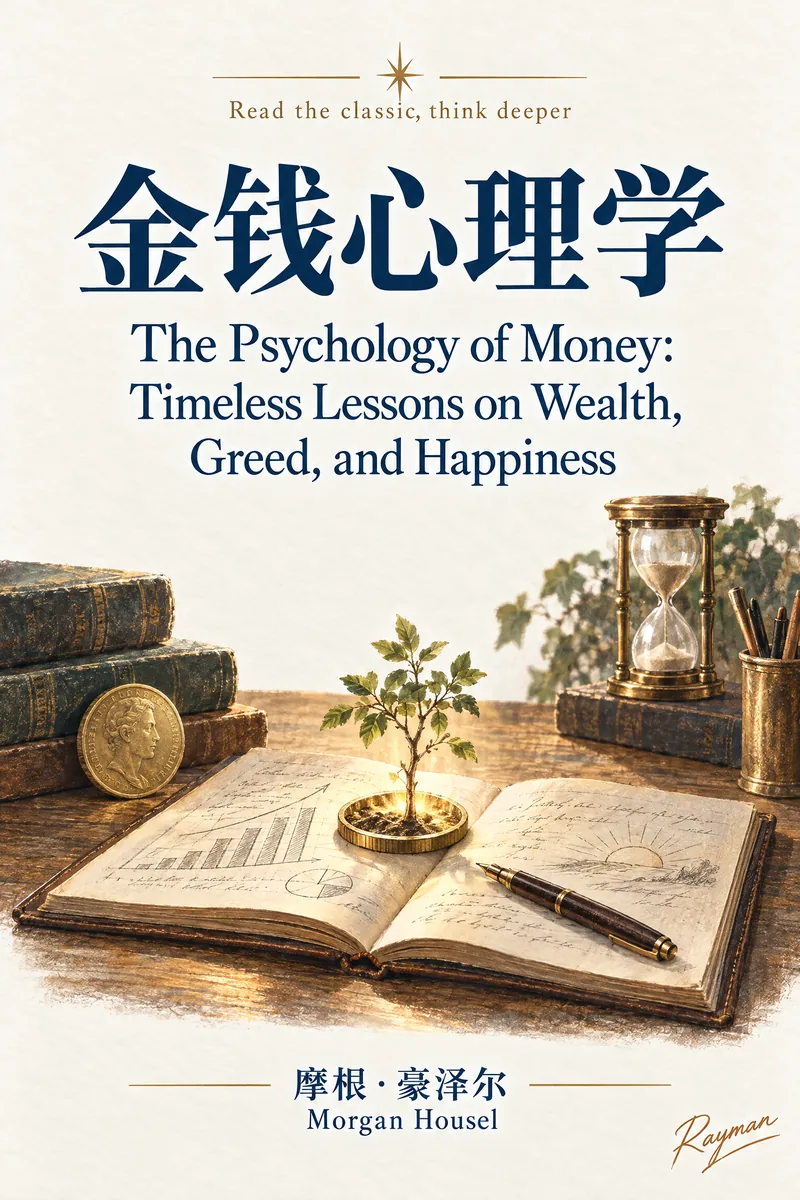
The Psychology of Money
《金钱心理学》
Timeless Lessons on Wealth, Greed, and Happiness
- Published
- 2020
- Category
- Psychology & Cognitive Science
- Difficulty
- Beginner
- Reading time
- ~7 hours
- Original language
- en
The Classic Index is not an objective scientific measure. It is this site's personal curation score.
What is this book about?
Housel uses short essays to argue that financial outcomes depend more on behavior than on knowledge: patience, room for error, and honesty about luck matter more than any formula. He offers no stock-picking method, asking instead why people reach opposite decisions from identical information.
Why read it?
It reframes investing from a technical problem into a psychological and historical one, and it conspicuously refuses to promise returns — rare in its genre. It is most pointed for people who already know the basics yet keep making the wrong call at the decisive moment.
Core Ideas
- The core skill in money is behavioral discipline, not mastery of market regularities.
- Luck and risk are two faces of the same coin: judge a decision by its process, not its outcome, because outcomes are governed by randomness.
- The sensible target is not maximum return but "enough," since optimizing for the best often makes a plan impossible to sustain.
- Each person’s view of money is shaped by a distinct history, so the same strategy carries entirely different risk for different people.
What questions does this book try to answer?
- Why do people with the same knowledge end up with radically different financial outcomes?
- What kind of financial goal is actually sustainable?
Who should read it?
For readers just forming a personal philosophy of money, and for investors re-examining their own risk appetite; it discusses no specific instruments, so basic familiarity helps.
Related Books
If you like this book