预设的答案:为什么最有效的安排不需要说服任何人
When "no one objected" is read as "everyone agreed," the power to allocate hides inside the choice nobody made — the question is never why no one objected, but who decided what happens when they do not
1. A Result That Was Never Approved
In the late 1990s Richard Thaler and Shlomo Benartzi designed a savings programme that has been quoted ever since. Instead of persuading employees to save more, the programme invited them to commit now to having a portion of each future pay rise diverted automatically into savings. Once enrolled, the arrangement continued unless a person actively opted out. Published in the Journal of Political Economy in 2004 under the title "Save More Tomorrow," it changed how much many people saved without changing anyone's mind: most participants never once made a decision that said "I will save more."
What deserves attention is not the effect but the structure. A result occurred; a decision did not. The system had written an answer in advance for the state of having done nothing, and then read that silence as acceptance. The same structure is everywhere: pre-ticked boxes, auto-renewing contracts, permissions that are public by default, meetings where the absence of objection counts as approval. None of it works by command or by argument. It works because most people, most of the time, do not change a default.
This needs to be separated from a familiar warning. "An employee who did not object is not necessarily satisfied" is a claim about missing information, and the remedy is to complete the sample. The question here is different: the system has not overlooked silence, it has assigned silence a specific outcome. One is a problem of knowledge; the other is a problem of allocation. So the useful question is not why nobody objected, but who decided what happens when nobody does.
2. A Default Is an Allocation, Not a Setting
Every architecture of choice has to answer one question: what does the system deliver when a person chooses nothing? "No default" is not an available answer. A programme must land on some branch, a meeting must end in some state, a form must open with something already selected. Claiming to have no default usually means handing it to whichever branch is least visible and least discussed. A default is therefore not a neutral technical detail but a substantive allocation: it decides who gets what before anyone speaks.
Its force comes from three layers, and none of them requires persuasion.
First, it assigns the burden of proof. Once a default exists, whoever wants a change must produce reasons, risk being overruled, and leave a record saying "I asked for this." Whoever wants things to stay as they are does nothing. The direction of dispute is fixed in advance: the status quo need not justify itself; deviation must. In organisations this is sharper than on a screen, because organisations add a social price to being the person who raised the objection.
Second, visibility is asymmetric. Deviation is logged as an anomaly, a ticket, an exception. Compliance leaves no trace. Looking at the data afterwards, what appears is "hardly anyone objected," not "almost nobody ever faced the question." Don Norman's discussion of affordances in The Design of Everyday Things makes the same point: the structure of an object already tells most people what to do, and the manual is written for those who want to do something else. Design does not need to persuade, because it specifies the action before reasoning begins.
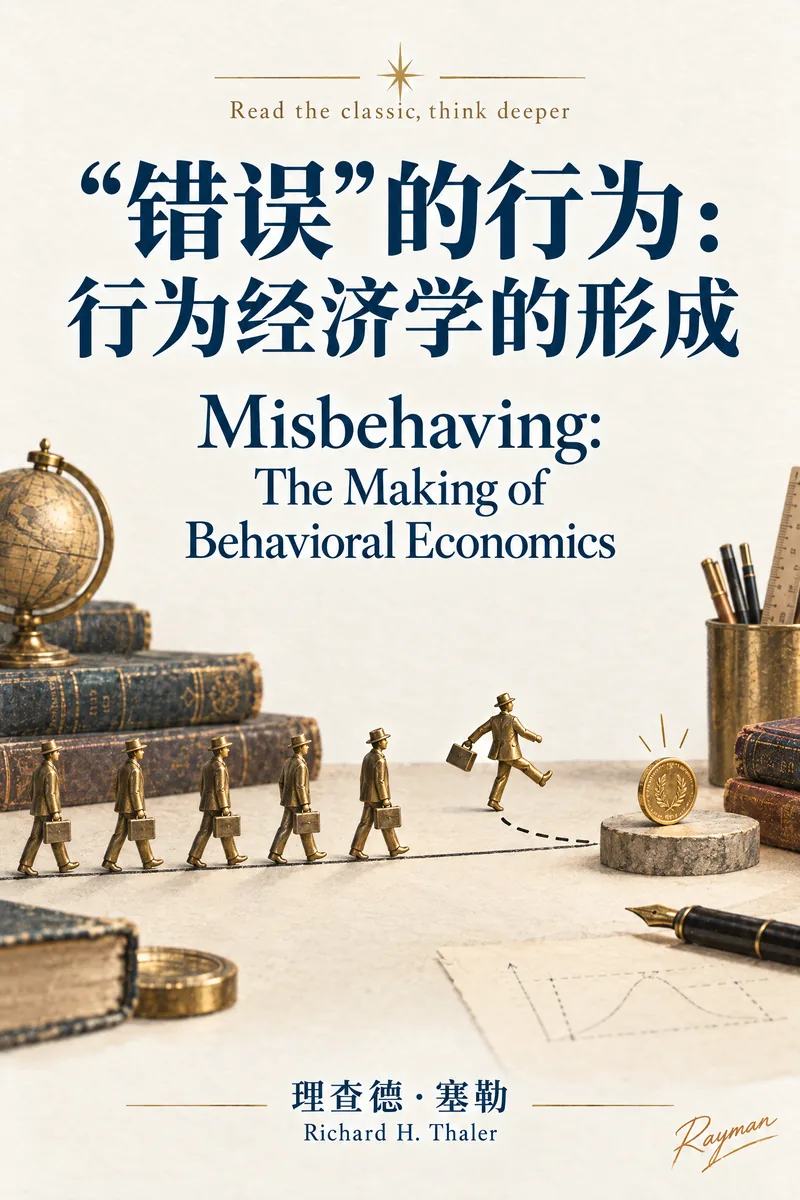
Third, reasons arrive late. In Misbehaving, Thaler returns repeatedly to status quo bias: the preference for leaving things unchanged operates without needing a reason. Jonathan Haidt's The Righteous Mind supplies a more general layer — moral judgements tend to be delivered first by fast intuition, with reasoning added afterwards as explanation. Taken together, "everyone agreed" is often a consequence rather than a premise: first an arrangement is accepted, then reasons for it are generated. A default is most successful precisely when it is least visible.
3. Why Not Choosing Is So Stable
If a default were merely convenient it should be easy to overturn. In practice it is remarkably stable, and the reason lies not in the option but in who bears the cost of changing it.
One, the costs are sharply asymmetric. Speaking up costs attention, exposure to being wrong, and possibly the reputation of being the person who complicated things. Saying nothing costs almost nothing. Unless the difference in outcomes is dramatic, a cautious person postpones the decision — and in a system with a default, postponement is acceptance.
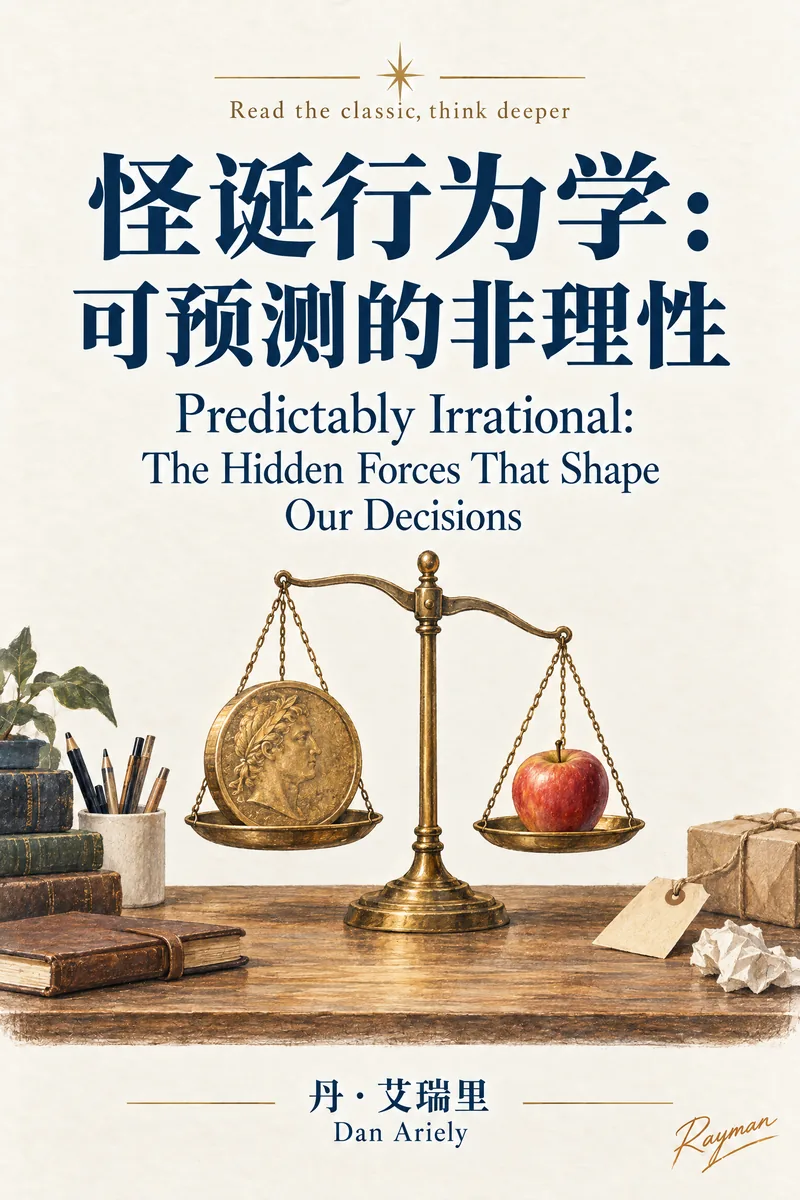
Two, silence reinforces itself. Whether one person opts out often depends on whether anyone else has; when everyone waits for the first signal, the absence of a signal becomes the collective output. Gustave Le Bon's account in The Crowd of groups surrendering independent judgement is too coarse to serve as a mechanism today, but the phenomenon of waiting for someone else to move first is observable: silences are not independent choices, they are choices made with reference to one another. Dan Ariely's Predictably Irrational documents the same family of facts — people believe they are judging independently while relying heavily on the starting point they were handed.
Three, a default rewrites its own evidence. Because compliance is recorded as a non-event, the organisation's accumulated experience contains exceptions but no defaults. The longer it runs, the more the default looks like a fact of nature. The loop then closes: a default reduces the incentive to state a preference, and the scarcity of stated preferences makes the default look beyond dispute.
There is a boundary that must be stated plainly. This explains stability, not legitimacy. That an arrangement survives does not make it good; that many people comply with it does not make it bad either. Reading stability straight off as manipulation and reading it straight off as consent are two faces of the same mistake.
4. The Counter-Case: Abolishing Defaults Is Neither Possible Nor Better
Three objections to this critique are strong, and all three hold.
First, "no default" cannot be done. Any system that must produce an outcome in finite time has to specify a state for non-choice. Declaring that there is no default usually means the default is set by a process nobody owns — worse than a written default, because there is no longer anyone to question.
Second, defaults are a gentle instrument and often produce real gains. They can be seen, exited and rewritten; they are lighter than coercion, concealment or repeated exhortation. What makes "Save More Tomorrow" defensible is not that it works but that employees were invited to make one explicit commitment now and could withdraw at any time: the default operates in the future, consent happens in the present. In The Effective Executive, Peter Drucker argues that an effective decision begins by stating its "boundary conditions" — what it must accomplish and where it applies. The same test fits defaults. With an exit route, a review date and a defined scope written down, a default is an arrangement. Without them, it is domination.
Third, problematising every instance of compliance would make cooperation impossible. Much compliance really is low-cost agreement, because most defaults are too mundane to be worth objecting to. If every unchanged setting had to be argued again, an organisation would spend all its energy on reconfirmation. There is a quieter limit as well: heavy reliance on defaults erodes the ability to give reasons. An organisation accustomed to obtaining cooperation through architecture often cannot explain itself when it genuinely needs to persuade, because it has never practised. The smoother the default, the weaker the muscle of argument.
5. Judgement: Putting a Price on Non-Choice
The question, then, is not whether to have defaults but what entitles this one to exist. Three tests are directly usable.
One: is exit real? "Technically you can opt out" and "opting out costs you something" are different claims. Check whether the cost has been deliberately raised: how many steps, whether an explanation is owed to someone, whether something else is lost along the way. The higher the cost, the closer the default is to an order.
Two: does the beneficiary have to defend it? The less a default needs explaining, the more it belongs in plain view. A useful question for whoever set it: if every person were required to choose actively, would I still get the same outcome? If the answer is no, the benefit comes from silence rather than approval. It may still be justified, but it can no longer call itself "what people chose."
Three: how is deviation recorded? If the system files deviation as a fault or an anomaly, the default has become a norm. If it files it as information, the default is still an arguable arrangement. The former kind of organisation grows steadily less able to discover that it set the wrong default, because every counterexample is assigned to the execution side.
All three tests point to one judgement: a good default is not "what most people would pick," but what still stands when it is publicly questioned and chosen again one person at a time. Only a default that survives being seen has earned the right to decide on someone's behalf.
6. Conclusion
Silence has no meaning of its own; the meaning is written into it by the system. "Nobody objected" is therefore never a fact about the crowd. It is a fact about the rule: it says only that somebody specified in advance what the absence of objection would count as.
That also locates freedom properly. It does not sit on the side of having no defaults — that side does not exist — but on the side of defaults that can be seen, challenged and revoked. A mature system does not pretend to have none. It writes them down, names who set them and when they will be reviewed, and periodically asks people to choose again. The measure of such a system is not how many comply, but whether anyone can say no at low cost.