看得见的证据:为什么照片越多,我们越难相信
A photograph is a piece of the world, not a sentence about it — left by light, yet carrying no meaning of its own. When the supply of images outruns the institutions that caption them, visual evidence is not multiplied but hollowed out
1. A Paradox: More Evidence, Fewer Conclusions
Start with an odd fact.
In the 1860s, not long after photography entered public life, a single photograph could nearly settle a case in court. Today humanity produces images in the tens of billions every day; almost every public event is recorded from multiple angles, on multiple devices, at multiple moments. By any reasonable expectation, we should find it easier than any previous era to agree on what happened.
The opposite is true. The same video can be treated by one side as incontrovertible proof of violence and by the other as a deceptively edited clip. The same photograph of a scene can yield opposite conclusions in two camps. The argument is no longer even about what the facts are; it is about whether a piece of footage can count as a fact at all.
Hence the question this essay takes up: why has the explosion in the supply of images not increased the value of visual evidence, but depleted it?
The most common answer is "too many fakes." Deepfakes, generated images, and recycled old footage have indeed made forgery cheap. But that answer cannot be the whole story, because the depreciation began before generated imagery became convincing. The deeper cause lies in the nature of the photograph itself: it is a trace, not a proposition.
2. A Photograph Is a Piece of the World, Not a Sentence About It
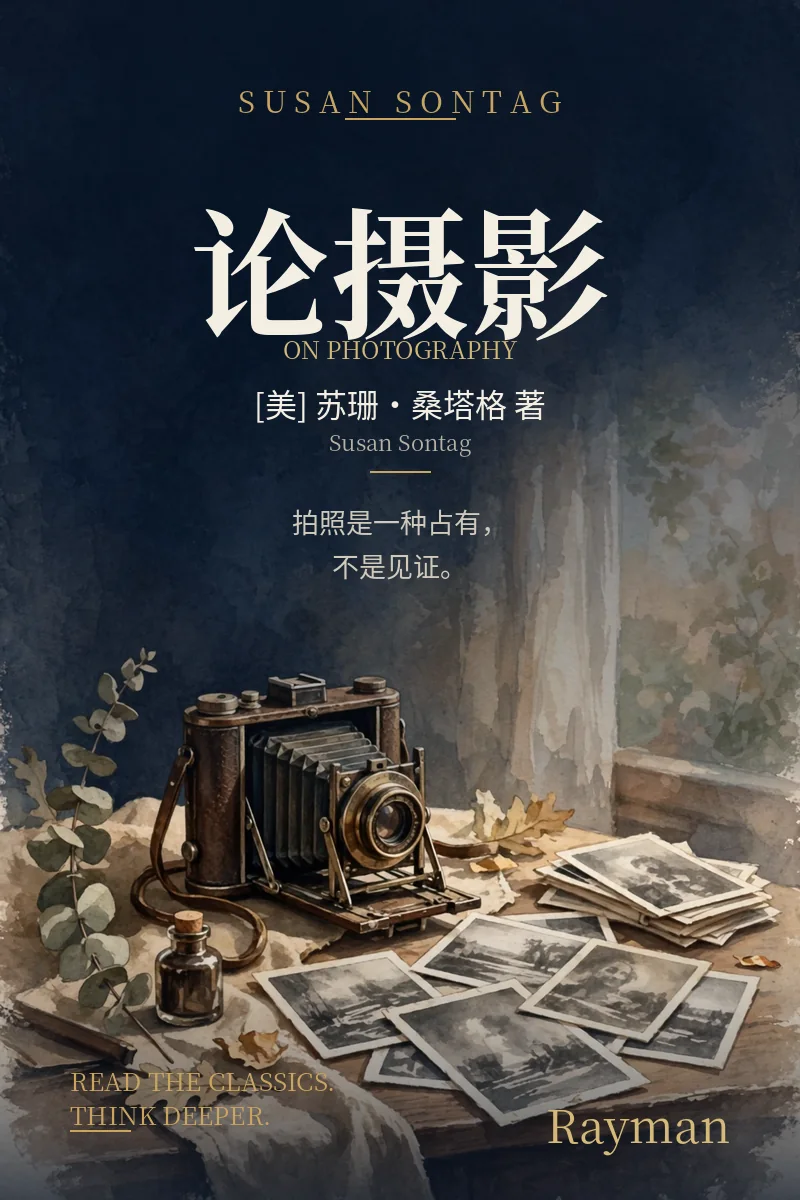
In On Photography (1977), Susan Sontag supplied what remains the most precise formulation. "To photograph is to appropriate the thing photographed," she writes. And then: photographed images "do not seem to be statements about the world so much as pieces of it, miniatures of reality that anyone can make or acquire."
That sentence does two things at once, and both matter.
First, a photograph has causal authenticity. Light reflects off a surface, passes through a lens, and lands on a sensor; the chain is physical and continuous. A photograph can serve as evidence precisely because it is a trace: something was there and blocked the light. Painting and prose cannot do this.
Second, a photograph has no propositional content. A picture of a crowd does not contain the judgment "the crowd was hostile"; it contains only "at this instant, from this angle, the light in this rectangle was distributed thus." To make it say anything, someone must add a sentence — a caption, a voiceover, a context.
Sontag puts both sides plainly: "A photograph passes for incontrovertible proof that a given thing happened. The picture may distort; but there is always a presumption that something exists, or did exist, which is like what's in the picture." Notice her wording: something like what is in the picture existed. The photograph proves that something was present, not what it meant.
This is the structural weakness of visual evidence: it is the strongest evidence and the weakest testimony. As a trace it is almost impossible to refute; as a statement it says nothing. Its force comes from the lens; its meaning comes from outside the lens.
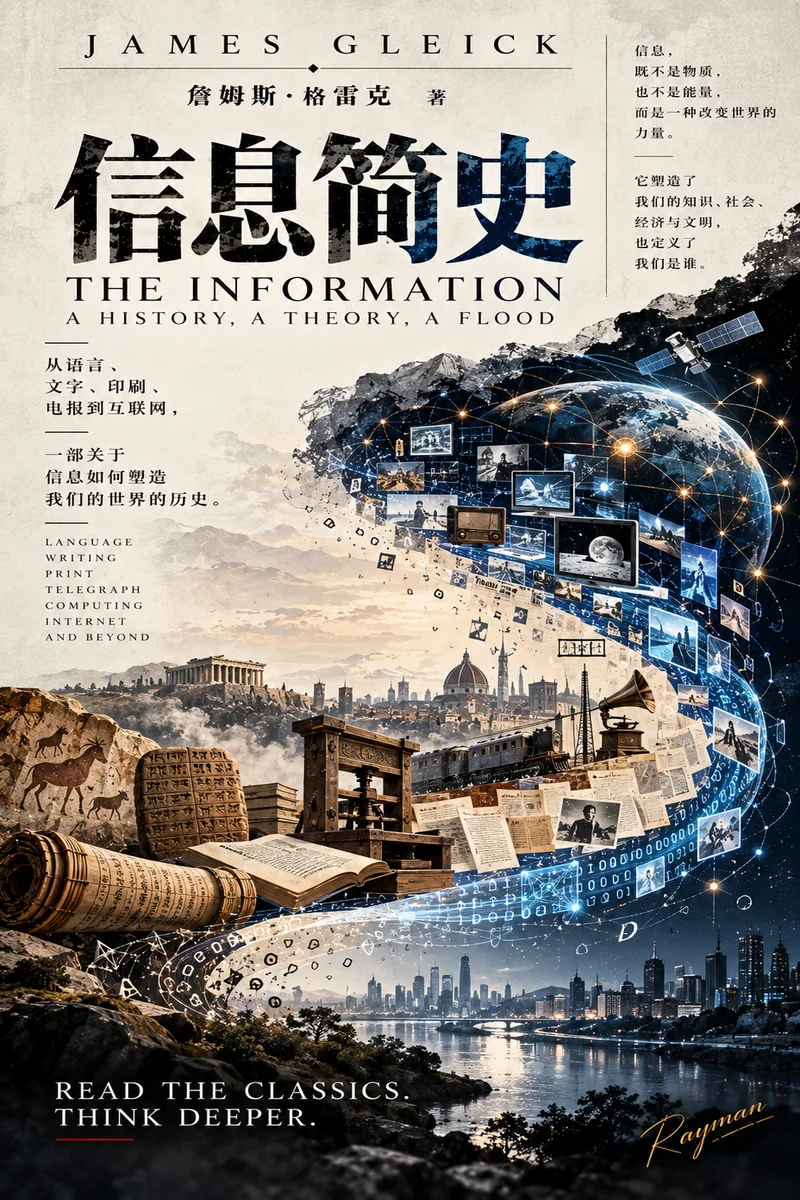
Gleick's The Information draws a distinction that is easy to miss: in Shannon's theory, "information" is a measure of uncertainty reduced, having nothing to do with "meaning." A message can be transmitted losslessly while conveying no meaning at all. A photograph is exactly like this — its pixels can be copied perfectly, but its meaning never arrives with the file.
And outside the lens is exactly what the frame decides. The frame is not a neutral window; it is an argument. It determines what is included, what is excluded, what is magnified, what is cropped away. Photographs, Sontag notes, "are as much an interpretation of the world as paintings and drawings are." The difference is that painting admits it is interpreting, while the photograph pretends it is not.
3. A Medium Is Not a Channel but a Grammar
If the problem were confined to individual photographs, we could fix it by looking more carefully. But the deeper problem is that the medium in which we argue has itself changed what counts as proof.
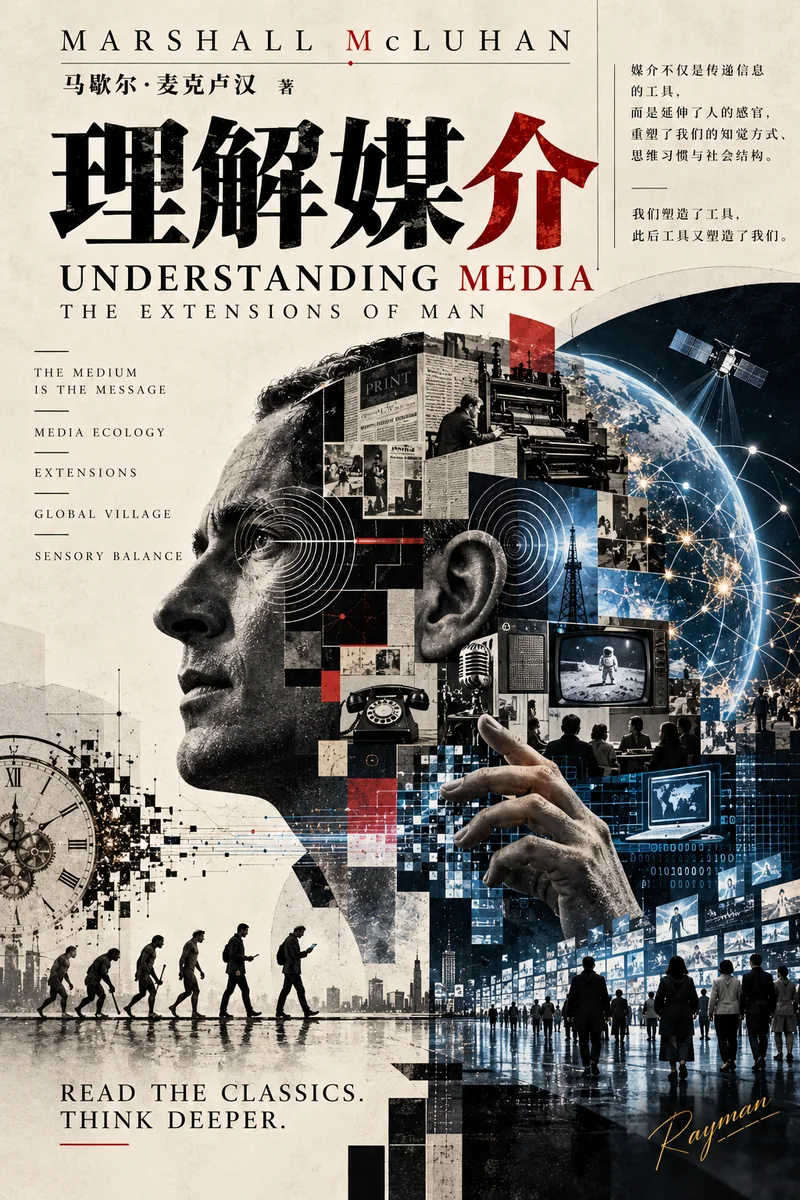
McLuhan's "the medium is the message" (1964) does not mean content is unimportant. It means the form of a medium reshapes our ratio of the senses before any content arrives. Print demands linear, sequential, refutable reasoning; the image demands simultaneous, holistic, emotional grasp. The medium through which you receive something determines what you will experience as persuasive.
Postman pushed the point further. In Amusing Ourselves to Death he argued that a medium is not a pipe but a metaphor: it defines, for an era, what kind of speech counts as serious. In the age of print, serious meant premises, inferences, counterexamples. In the age of television, serious meant engaging, brief, emotional. He invoked Huxley against Orwell: Orwell feared those who would ban books; Huxley feared there would be no one who wanted to read one.
Applied to images, the implication is clear: the crisis of visual evidence is not that someone forbids you to look, but that the act of argument becomes unnecessary. When a thirty-second clip can mobilize the entire emotional register, who has the patience for a report with footnotes? Argument is not refuted; it is skipped.
Harari's Nexus tells the history of information networks as a history in which connection comes before truth: the primary function of information has been to create order and organise people, not to represent reality faithfully. This explains a counterintuitive phenomenon — more images and denser networks do not necessarily produce more consensus; while connecting us, networks preferentially amplify the signals most likely to provoke emotion and be forwarded.
Carr's The Shallows adds the physiological layer: the brain is plastic, and deep reading is not an instinct but a trained capacity that can also atrophy. A media environment shapes attention over time, and attention determines whether a long inference can be completed. In other words, we do not first acquire judgment and then choose a medium; over the long run, the medium shapes the judgment.
4. The Counterargument: Images Have Always Testified, and Often Irreplaceably
At this point the strongest objection must be stated, or the essay collapses into another complaint that technology makes us stupid.
The objection has three layers.
First: images do testify, and often irreplaceably. War photography, footage of the civil rights movement, satellite images of refugee camps, forensic photographs of a crime scene — without these, many atrocities would remain a matter of "one side says, the other side says." Sontag did not deny this. What she opposed was treating the photograph as a substitute for understanding, not looking itself.
Second: the golden age of photographic truth is a myth. Staging, retouching, cropping, and mislabelling have existed since the invention of photography; the repeatedly altered official photographs of the Stalin era are the most famous example. What is genuinely new about generated imagery is that the cost of forgery has fallen toward zero, not that forgery has become possible for the first time. The change is in scale, not in kind.
Third, and most powerfully: suspicion of images can itself be weaponized. Once "any photograph might be fake" becomes common sense, the most convenient use of that belief is not to expose fakes but to dismiss real evidence. Scholars call this the liar's dividend: the spread of forgery capability benefits not the forgers but those who need to call true evidence false. The real danger is not that people believe fake images, but that they stop believing any image.
This objection is powerful because it relocates the blame from the image to the institution. If the problem is the image itself, the only remedy is to look less. If the problem is the system of warrant — who took it, when, whether it was cropped, whether an independent source exists — then it can be repaired.
5. The Limit: Pushed to the End, the Critique of Images Becomes a Suspicion of Seeing
But repair has limits, and they are easy to cross.
The first excess is iconophobia. If every photograph is a framing, an interpretation, and potentially a manipulation, then the "safest" position is to trust no image at all. But that position refutes itself: if the visual cannot be trusted, can the textual? Text has frames too — selection, wording, quotation, omission. Extend distrust from images to all representation and what remains is not clarity but aphasia.
The second excess is technological solutionism. A whole toolkit now addresses "is this image real?": content credentials, cryptographic signatures, time-and-location watermarks from capture devices. These tools are useful, but they answer "who produced this image, when, and with what device," not "what is this image being used to claim." Provenance can establish origin; it cannot establish meaning. Treating a problem of social trust as a technical problem is another form of avoidance.
The third excess is radical first-handism. If secondhand evidence is unreliable, trust only what you have seen yourself. But what any one person can see in a lifetime is a tiny fraction of the world; most of what we know about it arrives through other people, devices, and records. Refusing all secondhand knowledge is not rigour; it is giving up on knowing.
So the real limit is this: we cannot solve an institutional problem by looking less or by looking more technically. A critique of images that stops at "images cannot be trusted" merely moves suspicion from one object to another without rebuilding anything.
6. The Judgment: Treat Images as Claims, Not Facts
How, then, should images be used?
The judgment I would defend is this: treat every image as a claim, not a fact. A claim requires reasons; a fact does not. Treat it as a fact and you ask, "Is this true?" Treat it as a claim and you ask, "What is it claiming, and on what warrant?"
Three practices follow.
First, separate the trace from the claim. Facing an image, ask two different questions: what does it show as a trace? What is it being used to claim? The gap between the two answers is where argument happens, and where fraud is easiest. A photograph of a crowd can be used to claim "the situation is out of control" or "citizens are assembling peacefully"; the photograph supports neither. What supports them is the narrative attached.
Second, demand provenance, and count the edge of the frame as evidence. Who took it, when, where, whether the original file is intact, what was cropped out. What the frame excludes matters as much as what it contains. A photograph of a single instant and a video recording the full sequence have entirely different evidentiary weight. A photograph's persuasiveness often comes from what it did not capture.
Third, rebuild slow institutions. This is the least glamorous and most easily ignored item. Turning an image into usable evidence depends not on smarter algorithms but on clumsy things: reliable captions, traceable archives, editors willing to sign their names, institutions that independently verify, publishers that pay a price for error. These institutions are slow, expensive, and cannot be scaled — and they are the only channel through which a trace becomes testimony. Sontag called photographs "a grammar and, even more importantly, an ethics of seeing." The ethics has never been in the lens; it is in the people and organisations that use it.
Return to the opening question. More images make it harder to believe not because images have become fake, but because the institutions that convert images into evidence have not expanded with the supply. Supply grows exponentially; warrant grows linearly; the gap is suspicion.
The opposite of a fake image, then, is not a real image. It is a context. What a photograph needs in order to become evidence is not higher resolution but someone willing to say what it means and to answer for that statement.
Seeing is not knowing. Knowing requires someone to stand behind the sentence.