知识的价格:为什么最有用的东西最难被付钱
An idea cannot be taken back once spoken, yet it is expensive to produce. Jefferson's candle, Britain's half-century machine embargo and OpenSSL's two thousand dollars all point to one structural problem: for non-rival goods, no pricing mechanism can solve production, diffusion and maintenance at once
1. A Candle
In August 1813, Thomas Jefferson wrote a long letter from Monticello to the publisher Isaac McPherson about whether an idea can be property. One passage has been quoted ever since:
He who receives an idea from me, receives instruction himself without lessening mine; as he who lights his taper at mine, receives light without darkening me.
The line is usually read as a manifesto for free knowledge. But the letter it sits in addresses a narrower question: whether patents should exist at all, and if so, where their boundary should fall. And the man writing it had already served four years as Secretary of State — under the Patent Act of 1790, the Secretary of State sat with the Secretary of War and the Attorney General on a three-member examination board. He was one of the first patent examiners in the United States.
That tension is the subject of this essay. The person who wrote that ideas cannot in nature be a subject of property was also among the first to grant others a legal monopoly over them. This is not hypocrisy; it is a collision with a structural problem: the physical properties of an idea as a commodity are incompatible with every pricing mechanism we have.
2. The Thing Without a Correct Price
Economics calls such goods non-rivalrous: one person's use does not reduce what another can use. Bread is rivalrous — if I eat it, you cannot. A vaccine's manufacturing process is not: if I know it, you can still know it.
Non-rivalry yields an immediate corollary: its marginal cost is approximately zero. One more copy of a manual, one more clone of a repository, one more student in a lecture adds almost nothing to cost. Efficiency requires price to equal marginal cost. Efficiency therefore requires the price to be zero.
But its fixed cost is enormous. A physical law may consume twenty years of one person's life; a new drug typically requires more than a decade and hundreds of millions of dollars. That money has to be recovered from somewhere.
The result is a situation that has no solution in any standard price theory: between the price efficiency demands (zero) and the price cost recovery demands (greater than zero), there is no midpoint. This is not an imperfect market, nor a failure of regulation. It is a category mismatch between the nature of the good and the logic of pricing. Every institution must pick a position on one side of that contradiction and then carry the full consequences of that position.
This also explains why a century of argument over intellectual property never converges: both sides usually debate whether there should be a price, while the question with no answer is where along the range the price should fall.
3. Three Ways Out, and What Each Costs
History has produced only three families of solutions, and none is free.
The first: manufacture exclusion. Patents, copyright, trade secrets. Use law or technology to make knowledge rivalrous again — you may know it, but you may not lawfully use it.
The cost is plain. When price exceeds marginal cost, use falls below the social optimum, and that deadweight loss is the fixed overhead of the institution. The deeper problem is that it bends the direction of innovation: only what can be described in a claim is worth investing in, while the hardest parts — process know-how, records of failure, the intuition of debugging — fall outside protection by construction. Patent thickets and strategic filings are the mature form of this incentive: filing not to use, but to block.
The second: public funding. Taxation, foundations, universities, national laboratories.
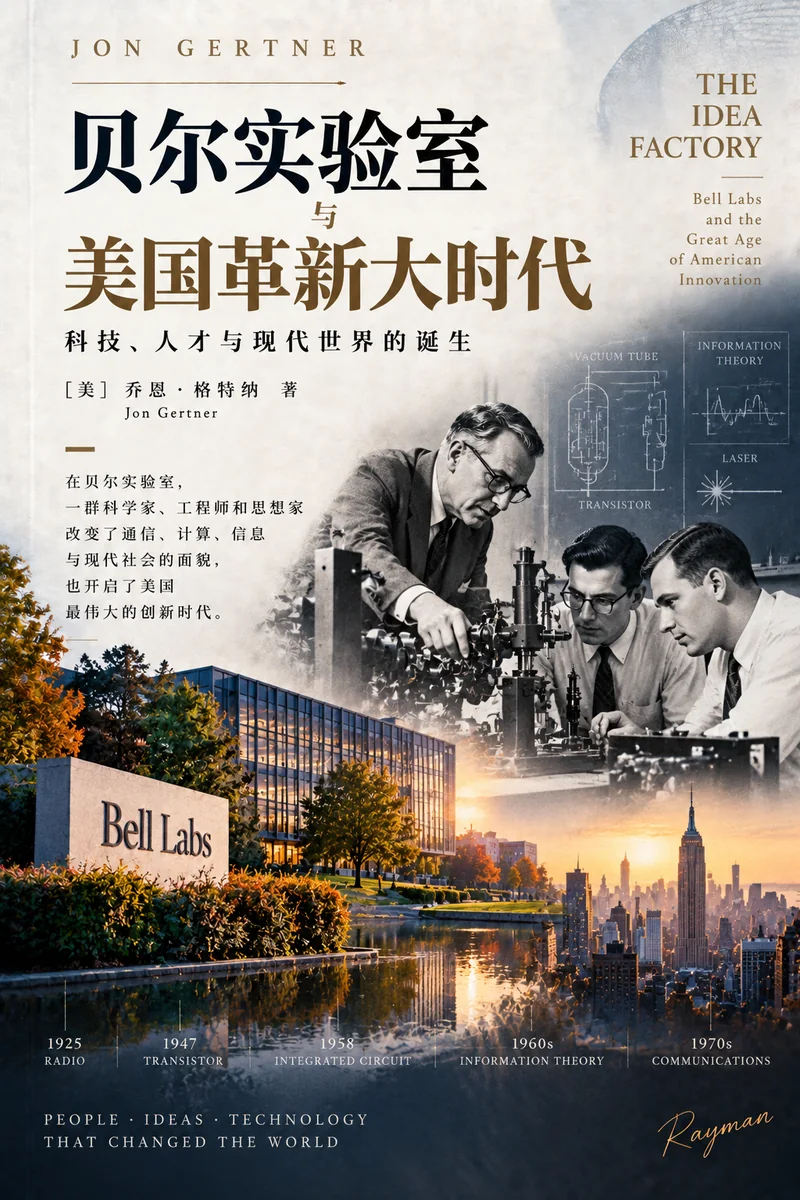
The cost is that "what deserves study" becomes a political or administrative judgment, and that judgment has a known weakness: it favours results that can be displayed quickly. Bell Labs is the famous counterexample, but its money came from the stable revenue of a regulated monopoly rather than from annual competitive review — a condition that has not recurred.
The third: reputation and reciprocity. Scientific priority, open-source communities, the recognition of peers.
The cost is that it rewards only work that can be signed. Writing a piece of code earns an attribution; maintaining it for ten years earns none. Publishing a paper earns an attribution; reproducing it earns none. This route is extraordinarily effective at production and systematically useless at maintenance.
Each route has its own bill, and none covers the whole. Not because the designers were uncreative, but because the three requirements genuinely conflict: production demands exclusion, diffusion demands openness, maintenance demands stable revenue — and exclusion obstructs diffusion while openness dissolves the revenue that maintenance needs.
4. The Physical Ceiling of Exclusion
The first route has a physical ceiling, and eighteenth-century Britain hit it.
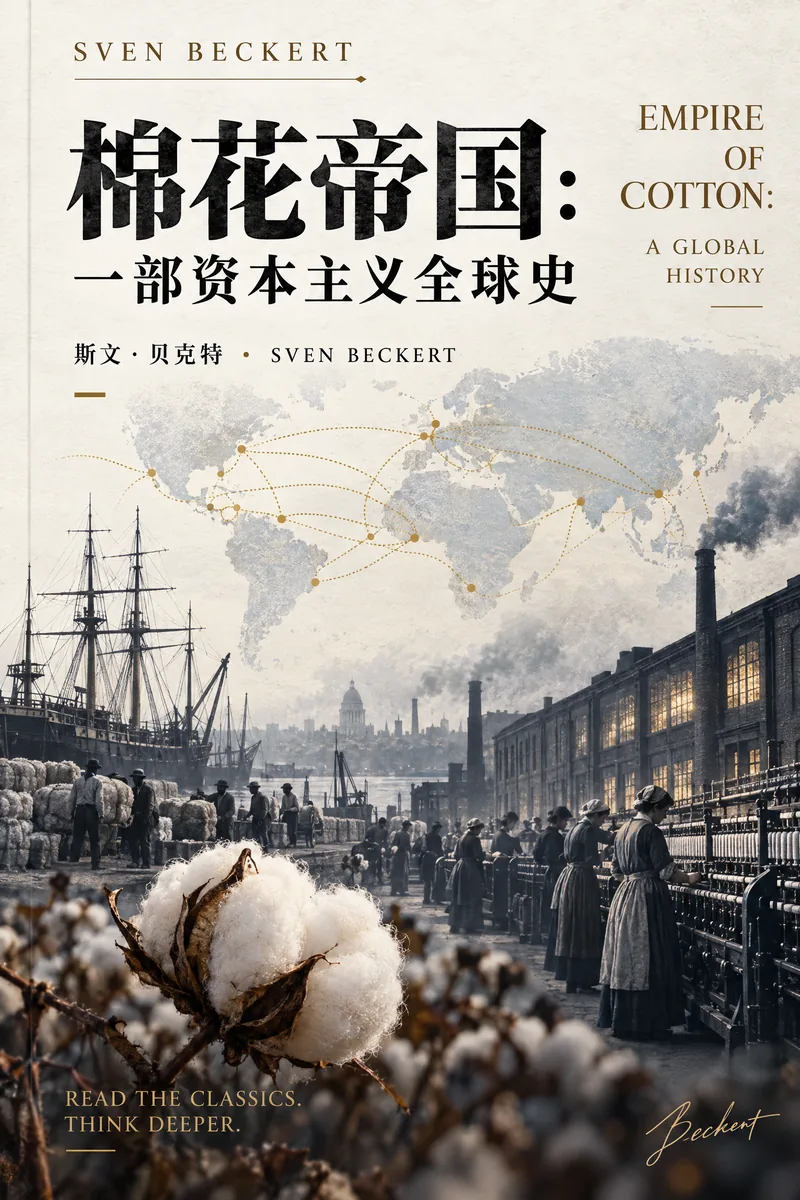
Britain was then the only country with mechanised cotton spinning. To hold that position, Parliament passed a series of statutes: no export of textile machinery or drawings, no emigration of skilled textile workers. These were not decorative. Restrictions on artisans persisted into the 1820s; the machinery export ban was not fully repealed until 1842.
The result was Samuel Slater, an English mill overseer, who sailed for America in 1789 disguised as an ordinary labourer. He carried no drawings. He had committed the construction of Arkwright's water frame to memory. In December 1790, on the Blackstone River at Pawtucket, Rhode Island, he got the machines running. The English later called him "Slater the traitor."
The lesson is not that embargoes fail. They bought time: by the estimate of Irwin and Temin, as late as 1807 the total value of cloth produced in New England was still only about eight per cent of the value imported from Britain. Half a century of prohibition purchased half a century of lead.
The precise lesson is this: the strength of exclusion depends on the carrier of the knowledge. Drawings can be stopped at customs; machines can be seized. But once knowledge resides in a human head, exclusion is a contest against human mobility, and no customs service has ever fully controlled that. As long as the carrier is a person who can walk away, prohibiting diffusion is a delaying tactic, not a property right.
Empire of Cotton traces exactly how that line was crossed repeatedly: technology, artisans and capital moved back and forth across the Atlantic, and each crossing lowered the marginal effectiveness of the ban. Britain lost its advantage not when a particular statute was repealed, but when the carrier of knowledge shifted from machine to person, and then from person to reproducible text.
5. The Counter-Case: Openness Fails Too
If exclusion has a physical ceiling, full openness should solve the problem. It does not.
On 7 April 2014, a buffer overflow in OpenSSL was disclosed under the name Heartbleed. Roughly seventeen per cent of the internet's certified secure web servers — close to half a million — were believed vulnerable, including banks, retailers and government sites.
Before that day, the OpenSSL project received about two thousand dollars a year in donations. It had one full-time developer, earning around twenty thousand dollars a year. The Linux Foundation then hastily created the Core Infrastructure Initiative; thirteen companies each pledged one hundred thousand dollars annually for three years.
What makes the case precise is this: the failure was not in production but in maintenance. Production earns reputation — write it and your name is on it. Maintenance earns nothing. And maintenance is the entire source of security. When a non-rival good is also non-excludable — a public good — the textbook conclusion is underprovision. The actual mechanism is narrower and harder to see: the visible parts get built, the invisible parts go unpaid.
There is a subtler layer still: exclusion changes not the quantity of innovation but its composition. Petra Moser's 2005 paper in the American Economic Review tested this using exhibit data from the 1851 London and 1876 Philadelphia world's fairs. The finding was not that innovation requires patents — countries without patent laws showed no clear decline in the number of innovations. It was that those countries concentrated their innovation in a small set of industries where patents mattered little, while countries with patent laws showed a markedly more diversified distribution.
That result is more interesting than either "patents work" or "patents are useless." It says the primary effect of the patent system is to change the composition of innovation — to push resources toward whatever can be described, claimed and licensed. Whether that is a benefit or a distortion depends on which directions you think matter more.
A final counter-case comes from antibiotics. A 2025 World Health Organization analysis found that the number of antibiotics in clinical development had fallen from 97 in 2023 to 90. The cause is not technical difficulty but commercial structure: a good new antibiotic should be used as little as possible, held in reserve until other drugs fail, while pharmaceutical recovery depends on volume. For this class of goods, efficacy and revenue point in opposite directions. Market pricing here is not malfunctioning; it is correctly executing the wrong objective function.
6. The Criterion Is Maintenance, Not Access
Put these together and the conclusion is unsatisfying but more honest: no single institution can solve production, diffusion and maintenance at the same time.
The operable question, then, is not whether knowledge should have a price, but three narrower criteria.
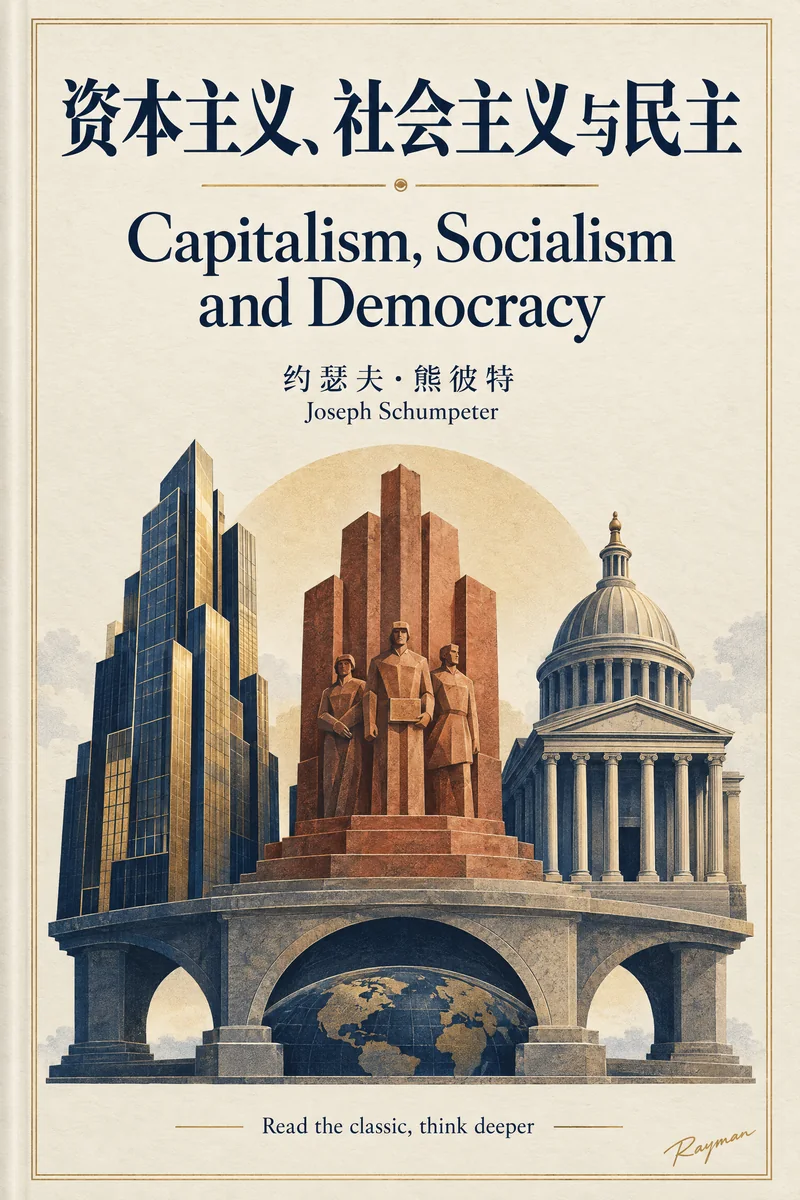
First, does the term of exclusion match the payback period? Patent protection runs twenty years from filing, while a new drug commonly takes more than a decade from discovery to market — leaving less than half the term for recovery. Whether a term is long enough cannot be judged by the value of the invention, only by how long the money needs to come back. Schumpeter, in Capitalism, Socialism and Democracy, treated monopoly profit as the fuel of innovation; on the scale of the payback period he was right. But the amount of fuel must match the distance, and too much wastes as surely as too little.
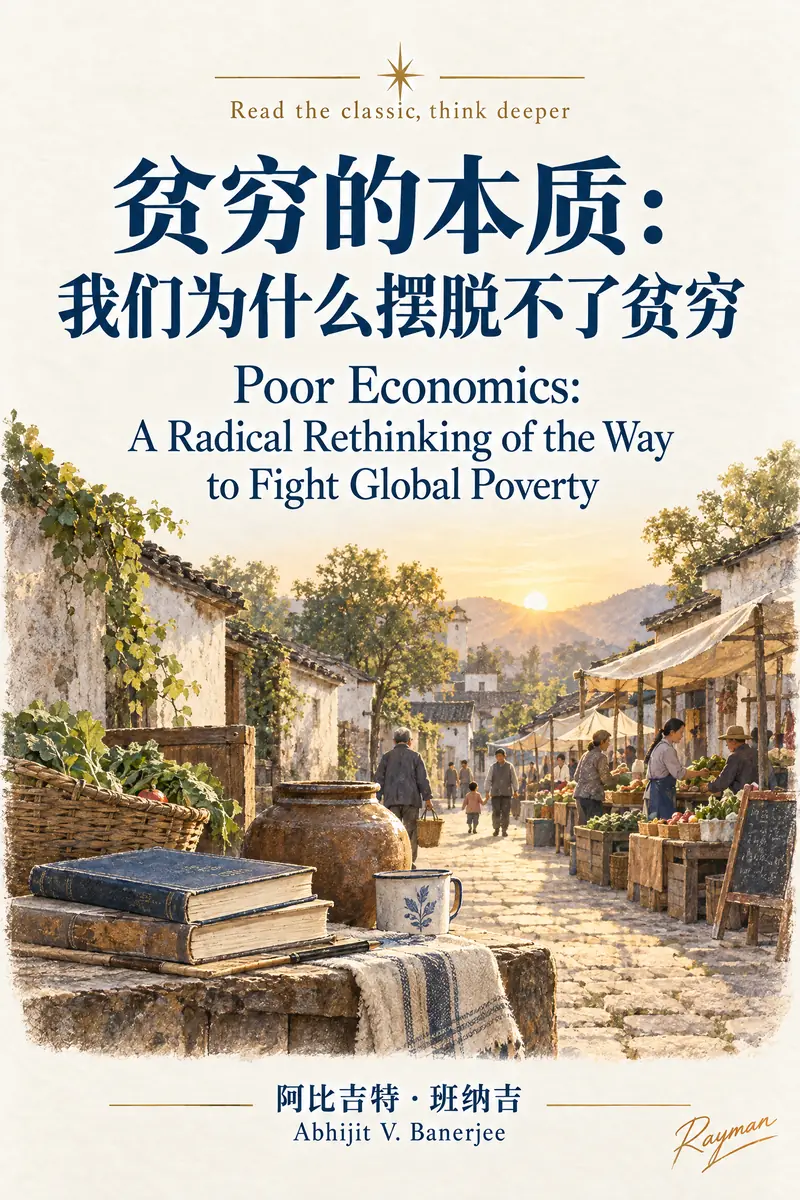
Second, does the good become more dangerous the more it is used? Antibiotics, antimicrobial resistance, some safety technologies belong here. For these, price must be decoupled from volume: subscription models, milestone prizes, and arrangements that separate licence fees from sales — what the field calls delinkage — are variants of one logic. Poor Economics, in discussing vaccine and drug pricing in poor countries, touches the same structure: when ability to pay runs opposite to need, price stops being information and becomes an obstacle.
Third, is the cost of maintenance visible? The lesson of OpenSSL is not that open source is bad, but that where there is no attribution, there is no budget. Core libraries, tests, documentation, reproduction — none of it generates narrative, so all of it ranks last in every review process. Putting it into a budget line is worth more than exhorting people to value infrastructure.
Beyond the three criteria, the limits must be stated.
First, openness in basic science is a moral requirement, not an efficiency choice. Defending it in the language of efficiency is actively dangerous: once it enters an efficiency calculation, it will lose to applied research in many settings. Its justification is that no one has the right to lock up the instruction manual of the world — not that it pays better.
Second, "knowledge should be free" and "knowledge producers should work for free" are two different claims. Confusing them turns openness into an implicit tax on a few — and the taxed are usually those with the least bargaining power.
Third, not all knowledge should be open. The details of pathogen gain-of-function work, or attack code that can be used directly, belong to the category where diffusion is itself the harm. Admitting this does not overturn the argument; it adds a boundary condition to it.
Return to the candle. Jefferson's metaphor is right: light is not diminished by being shared. But he left out one thing the metaphor cannot carry — the candle itself burns down, and no one plants wax because someone said light ought to be free. What has always needed paying for is not the light. It is the candle, and the person keeping it from going out.