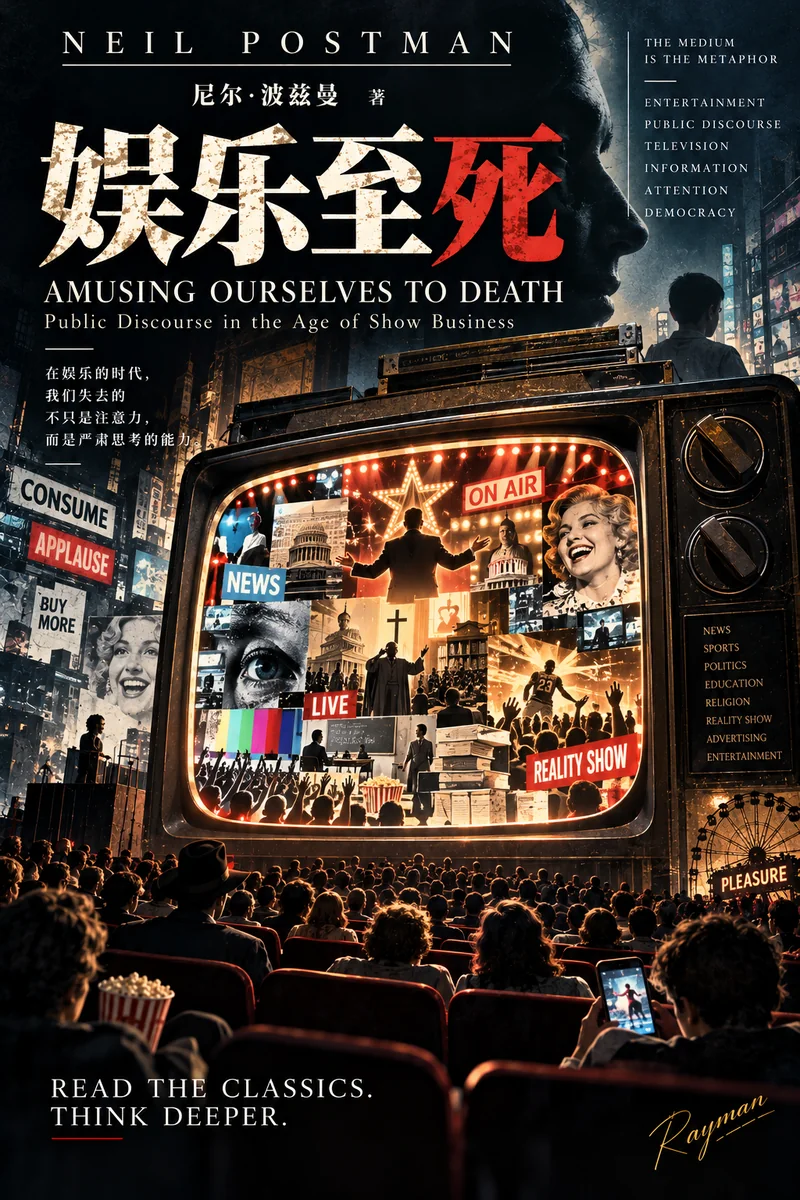
Amusing Ourselves to Death
《娱乐至死》
Public Discourse in the Age of Show Business
- Published
- 1985
- Category
- Society & Civilization
- Difficulty
- Intermediate
- Reading time
- ~6 hours
- Original language
- en
The Classic Index is not an objective scientific measure. It is this site's personal curation score.
What is this book about?
Postman contrasts the warnings of Orwell and Huxley and argues that Huxley came closer: culture is not crushed by force but voluntarily surrenders its attention to serious matters in favor of entertainment. Taking television as his main case, he shows how the form of a medium determines what can be said and what becomes unsayable.
Why read it?
Its framework predates social media by three decades yet applies almost point by point to the attention economy of today. It forces a question on producers and consumers of content alike: the form of a medium shapes what we are able to discuss.
Core Ideas
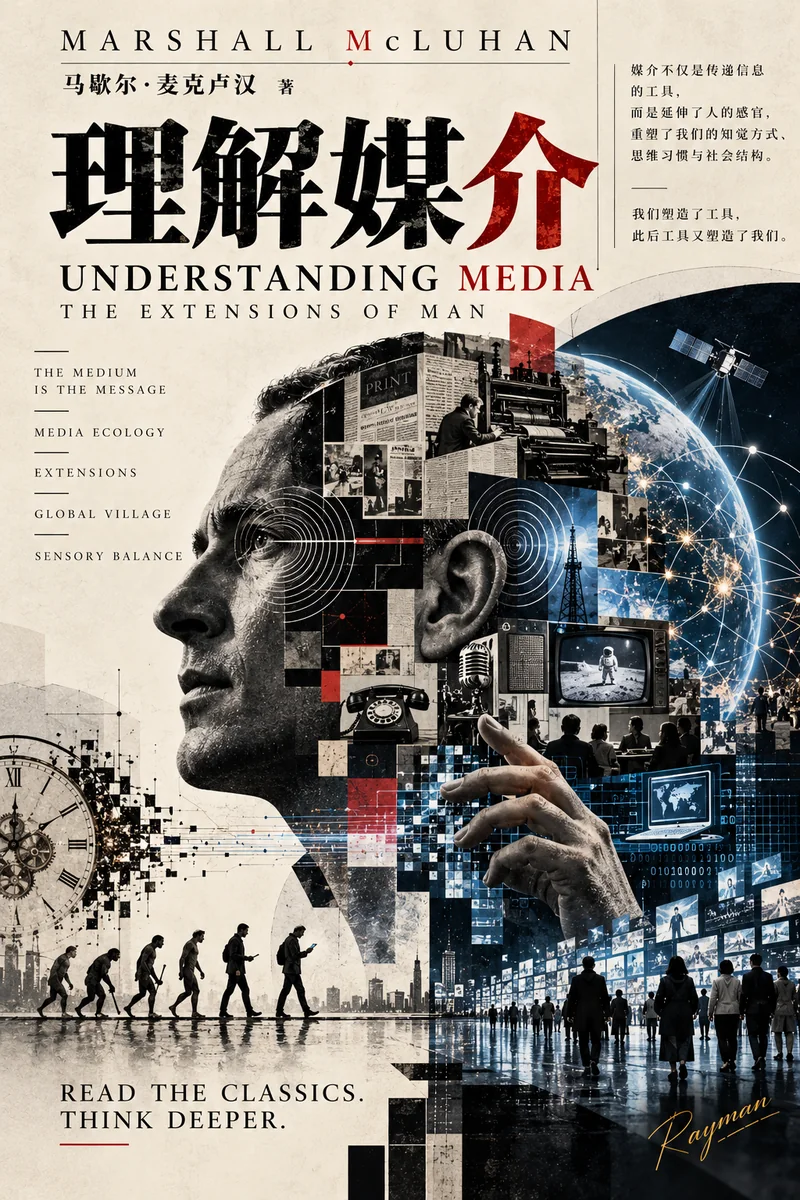
- A medium is not a neutral channel; it prescribes how information is organized and therefore what forms of thought are possible.
- Print culture demands linearity, delay, and argument, while television organizes itself around the fragment, the immediate, and the entertaining.
- The danger is not entertainment as such but the moment it becomes the default form of all discourse, leaving serious discussion without a place.
- Postman locates resistance in understanding the formal effects of media rather than in simply refusing technology.
What questions does this book try to answer?
- How does the form of a medium determine the content and depth of public discourse?
- When entertainment becomes the default register, where can serious discussion still take place?
Who should read it?
For readers in media studies, communication, and public writing, and for practitioners in the attention economy; its specific analyses of television need translation into today’s media environment.
Related Books
If you like this book