
The Crowd
《乌合之众》
A Study of the Popular Mind
- Published
- 1895
- Category
- Society & Civilization
- Difficulty
- Intermediate
- Reading time
- ~7 hours
- Original language
- fr
The Classic Index is not an objective scientific measure. It is this site's personal curation score.
What is this book about?
Le Bon argues that once individuals merge into a crowd, their judgment and conduct change qualitatively: emotion becomes contagious, suggestion is more readily accepted, and a sense of responsibility thins. His account rests on observation and intuition rather than the empirical methods that came later, but it poses a set of questions that stayed alive.
Why read it?
It is a document of historical value: it shaped twentieth-century imaginings of mass politics and was later criticized for its elitist stance and thin evidence. Reading it is also a way to watch a theory of crowds being shaped by its own era.
Core Ideas
- Inside a crowd, individuals enter a hypnotic-like state in which rational inference gives way to emotion and imagery.
- Crowds are moved by images and assertion rather than argument, with repetition and contagion as the key mechanisms.
- Crowd behavior tends toward extremes, expressing itself as heroism no less than as destruction.
- Le Bon treats the crowd mind as inferior to the individual mind, a hierarchical judgment that later critics attack most sharply.
What questions does this book try to answer?
- Why do judgment and responsibility operate differently once an individual joins a crowd?
- What rules govern politics and public opinion in a mass age, distinct from those of individuals?
Who should read it?
For readers interested in crowd psychology, communication, and political sociology; treat it as a document in intellectual history rather than an empirical study, and watch for its period biases.
Related Books
If you like this book
 Extraordinary Popular Delusions and the Madness of Crowds
《大癫狂》
Finance
Classic Index 86
Extraordinary Popular Delusions and the Madness of Crowds
《大癫狂》
Finance
Classic Index 86
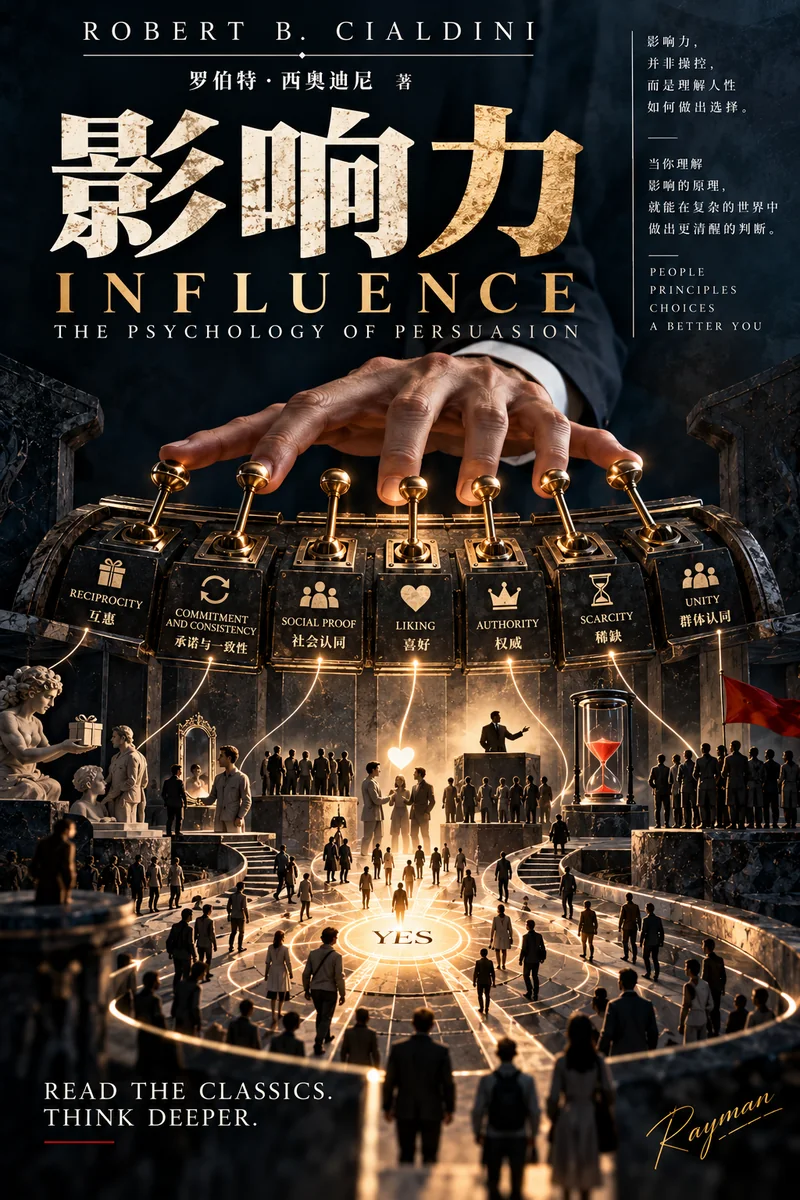 Influence
《影响力》
Psychology & Cognitive Science
Classic Index 92
Influence
《影响力》
Psychology & Cognitive Science
Classic Index 92
 The Rise and Fall of the Third Reich
《第三帝国的兴亡》
World History
Classic Index 91
The Rise and Fall of the Third Reich
《第三帝国的兴亡》
World History
Classic Index 91
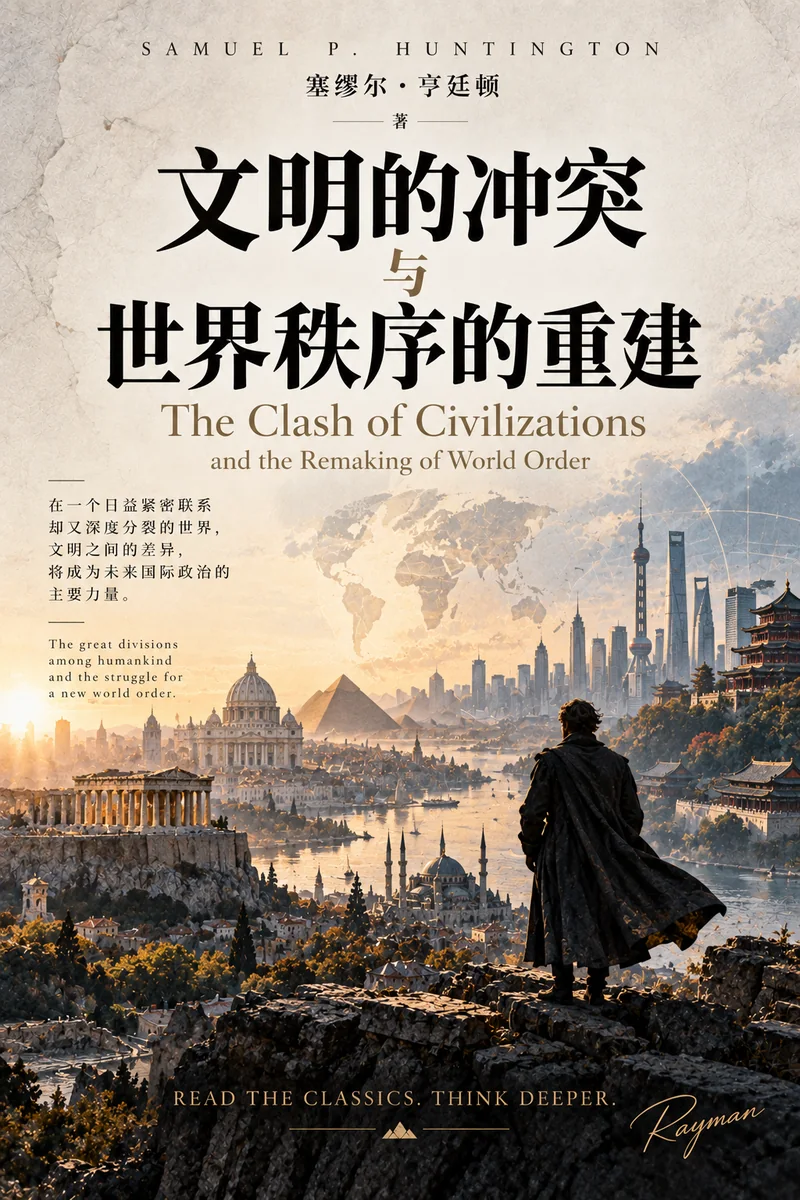 The Clash of Civilizations and the Remaking of World Order
《文明的冲突与世界秩序的重建》
World History
Classic Index 91
The Clash of Civilizations and the Remaking of World Order
《文明的冲突与世界秩序的重建》
World History
Classic Index 91