Economics 1936
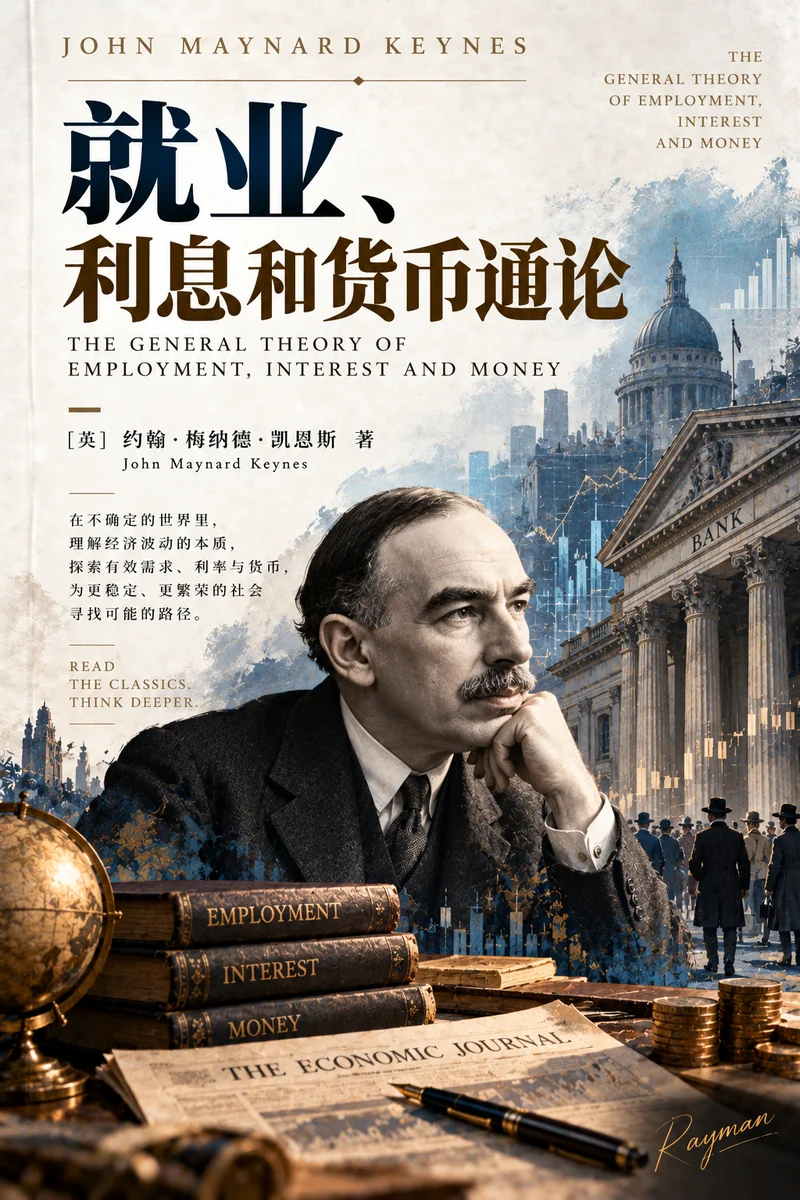
The General Theory of Employment, Interest and Money
《就业、利息和货币通论》
- Published
- 1936
- Category
- Economics
- Difficulty
- Advanced
- Reading time
- ~25 hours
- Original language
- en
The Classic Index is not an objective scientific measure. It is this site's personal curation score.
What is this book about?
Keynes argues that output and employment are determined by effective demand rather than tending automatically toward full employment, introducing liquidity preference, the marginal propensity to consume, and the multiplier — and with them a theoretical case for managing aggregate demand.
Why read it?
It changed the language of macroeconomics: any later discussion of unemployment, fiscal policy, or central banking has to answer the questions it raised. The book itself is dense and repeatedly revised; read it with a guide and some intellectual history.
Core Ideas
- Effective demand determines output and employment; the economy does not necessarily return to full employment on its own.
- In a liquidity trap, monetary expansion may fail to stimulate further spending, which gives fiscal policy an irreplaceable role.
- Investment depends on expectations and “animal spirits,” making it inherently unstable and a principal source of fluctuation.
- Distribution and institutional arrangements affect aggregate demand, so macro questions cannot be derived from micro price theory alone.
What questions does this book try to answer?
- Why can an economy settle below full employment for a long time?
- What should government do when monetary policy stops working?
Who should read it?
For readers with some economics background who want the origin of modern macroeconomic policy thinking. The original is not easy going; secondary literature helps.
Related Books
If you like this book