Philosophy 1883
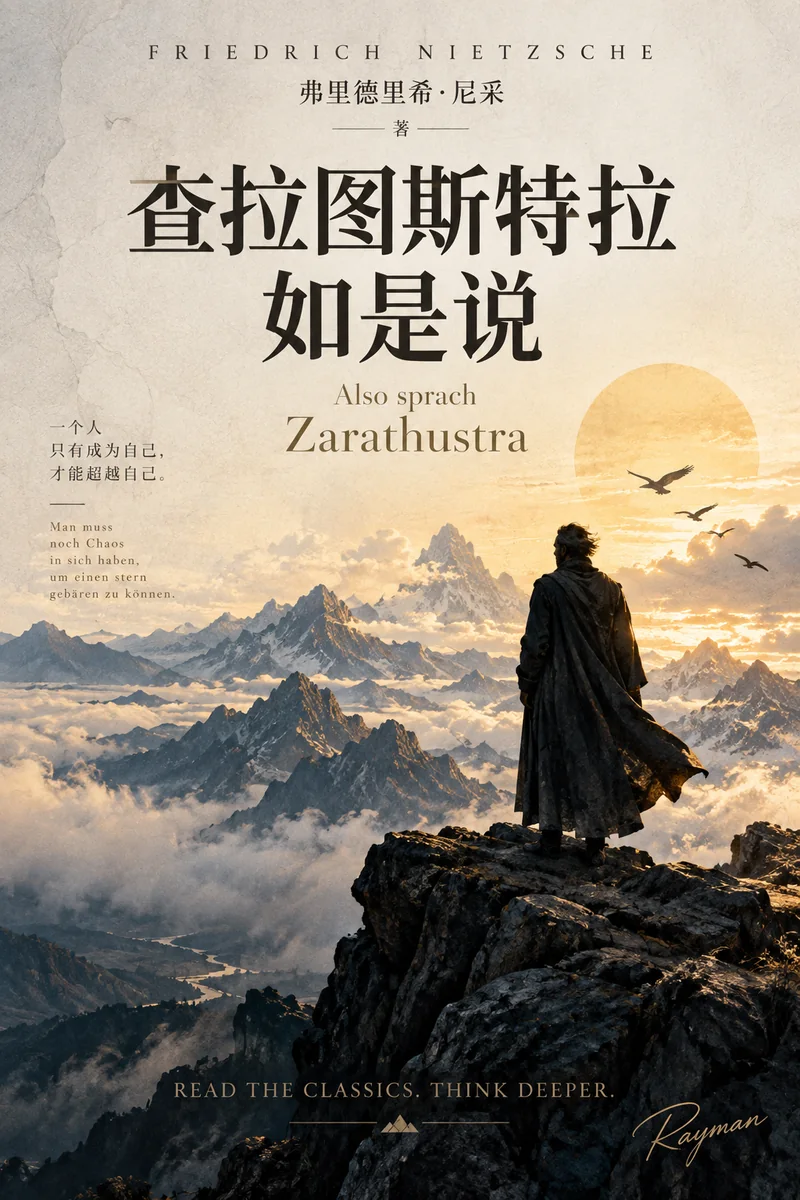
Thus Spoke Zarathustra
《查拉图斯特拉如是说》
A Book for All and None
- Published
- 1883
- Category
- Philosophy
- Difficulty
- Advanced
- Reading time
- ~12 hours
- Original language
- de
The Classic Index is not an objective scientific measure. It is this site's personal curation score.
What is this book about?
This is a philosophical poem in which Zarathustra announces that God is dead, teaches the overman and the eternal return, and challenges readers to create values rather than inherit them. It is among the most influential and most misread works of modern philosophy.
Why read it?
Reading it directly is the best defense against the caricatures. Its literary form matters: the argument is carried by image and voice rather than by propositions, so extracting conclusions alone will not work.
Core Ideas
- With inherited religious frameworks no longer binding, values must be created rather than received.
- The overman is a direction of self-overcoming, not a biological type.
- The eternal return is a test: could you affirm your life if it repeated endlessly?
- The last man — comfortable, risk-averse, small — is the danger Nietzsche fears more than chaos.
What questions does this book try to answer?
- When shared frameworks of value lose their hold, how does a person legislate for themselves?
- Can a person affirm their own life?
Who should read it?
For readers with some experience in philosophy. Use a reliable introduction and annotations, and learn something about the book’s reception history.
Related Books
If you like this book