必然性的发明:我们如何把偶然改写成命中注定
From Sarajevo to the Late Bronze Age, from geographic determinism to imperial overstretch — why history is always retold, after the fact, as a track already laid
A Concrete Problem
Open almost any history book and the past looks like a straight track leading, inevitably, to the present. Rome had to fall; the Industrial Revolution had to begin in Britain; a given war had to break out. Yet open the diaries, telegrams, and memos of the people who lived it, and a different picture appears: branching roads, hesitation, improvisation, and a great deal of "if only that had not happened that day."
This is worth treating as an intellectual problem rather than a sigh. Its real question is: when we look back, where does "necessity" actually come from? If the past really was a predetermined track, why did the people inside it almost never see the rail? The deeper trouble is that overusing "necessity" for the past quietly reshapes how we judge the future: we mistake a path visible only after the fact for an outcome predictable before it, and then lapse either into fatalism or into hubris.
The claim this essay defends is an uncomfortable one: one of humanity's most stubborn cognitive habits is to reinvent contingency as inevitability after the event. This retrospective necessity is both a tool for understanding history and the main source of misreading it.
The Hindsight Filter: We See Only the Branch That Happened
Once an outcome lands, the imagination folds. We struggle to recall that in the summer of 1914 most European decision-makers did not expect a general war, or that across the Late Bronze Age Mediterranean countless cities traded, married, and corresponded as usual, with no sense that civilization was about to break.
This folding is not a memory problem but a bias: knowing the result, we systematically overestimate how predictable it was beforehand. Psychologists call it hindsight bias. Its cost is that it leads us to read every turn of history as "it had to be this way," inflating both our own predictive confidence and our assessment of historical actors as either farsighted or foolish. More hidden still, it makes us forget the things that did not happen — and those unmade events are precisely the other roads history could have taken.
Two Competing Scripts: The Contingent and the Necessary
On why history took its shape, the shelf holds two scripts that argue with each other, and each is well supported.
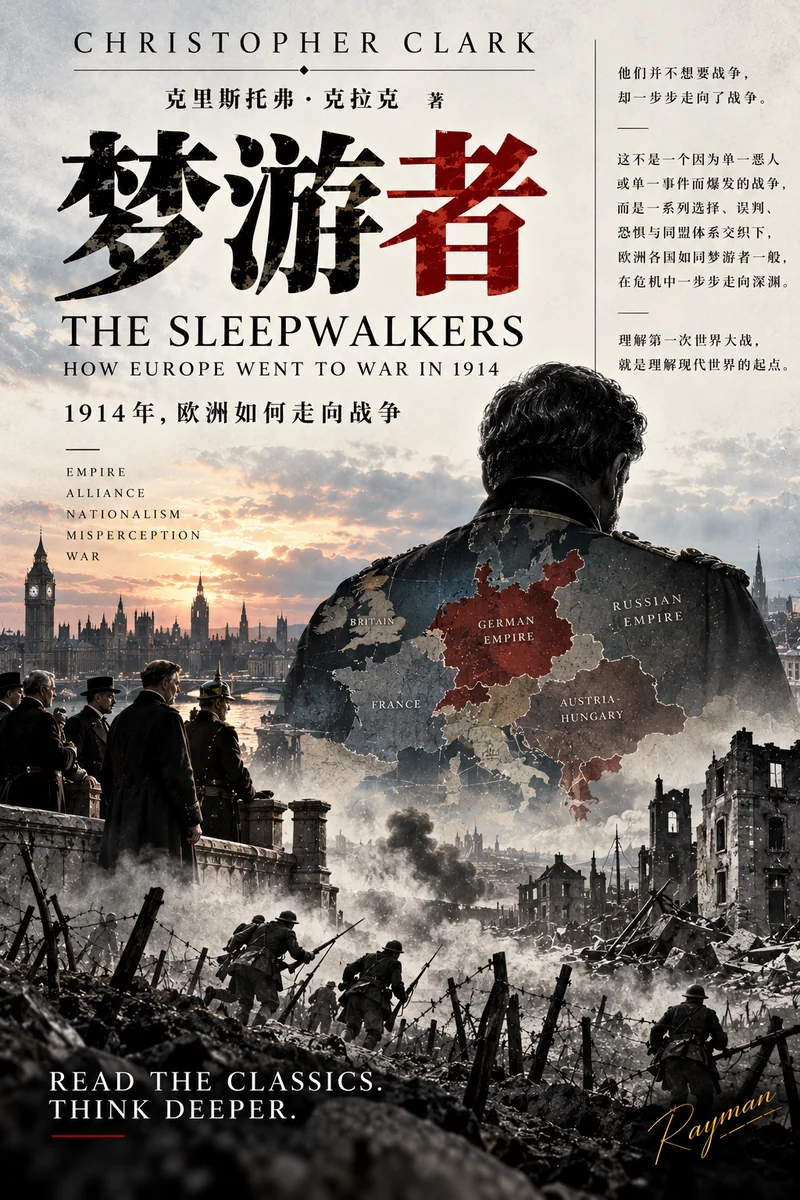
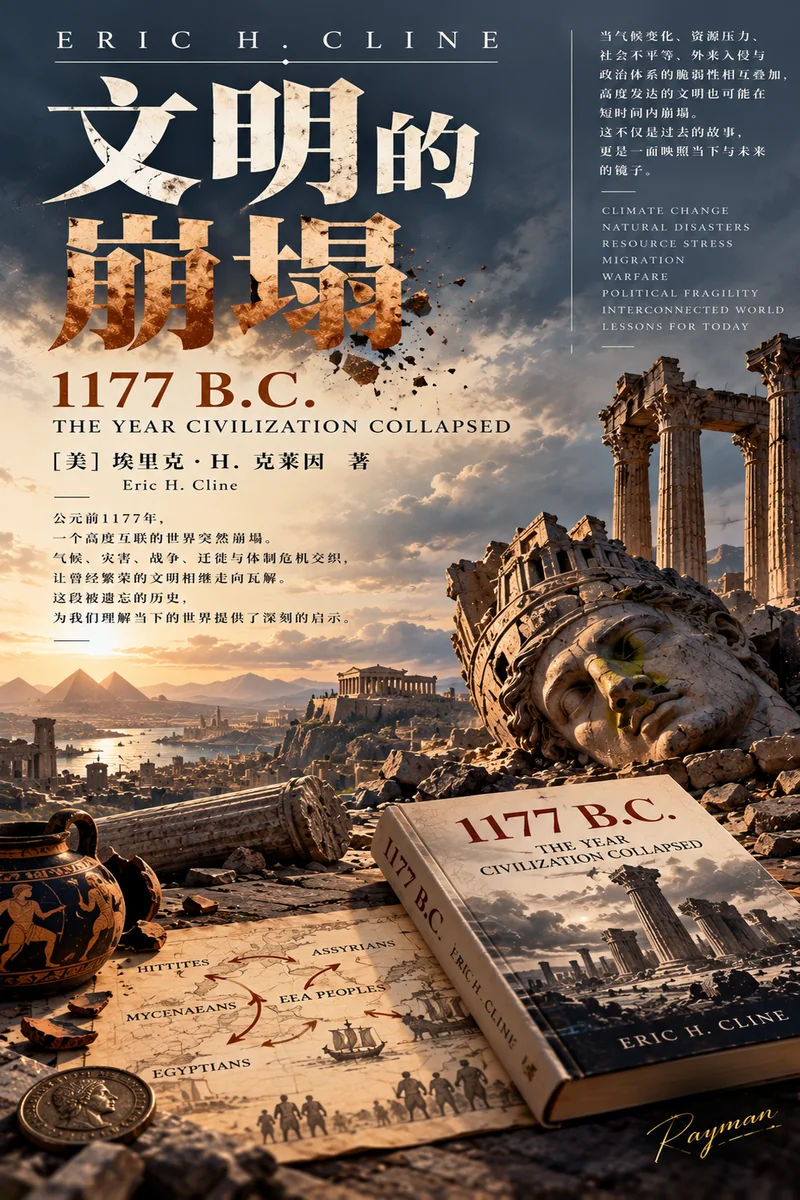
The contingent script is represented by Christopher Clark's The Sleepwalkers and Eric Cline's 1177 B.C. Clark rewrote the origins of the First World War around a single claim: the war was not a track anyone laid in advance but a stack of avoidable, contingent choices; the danger of the crisis lay precisely in the fact that no single party could stop it alone, and none could be cleanly branded the culprit. Cline explains the collapse of the Mediterranean world in 1177 B.C. as a "perfect storm" — earthquakes, drought, migration, invasion, and the over-tight interdependence of economies, several independent shocks landing almost together. No single cause could have destroyed that world; their coincidence did. Both books point to the same thing: many world-changing turning points look momentous in retrospect and merely probabilistic in prospect.
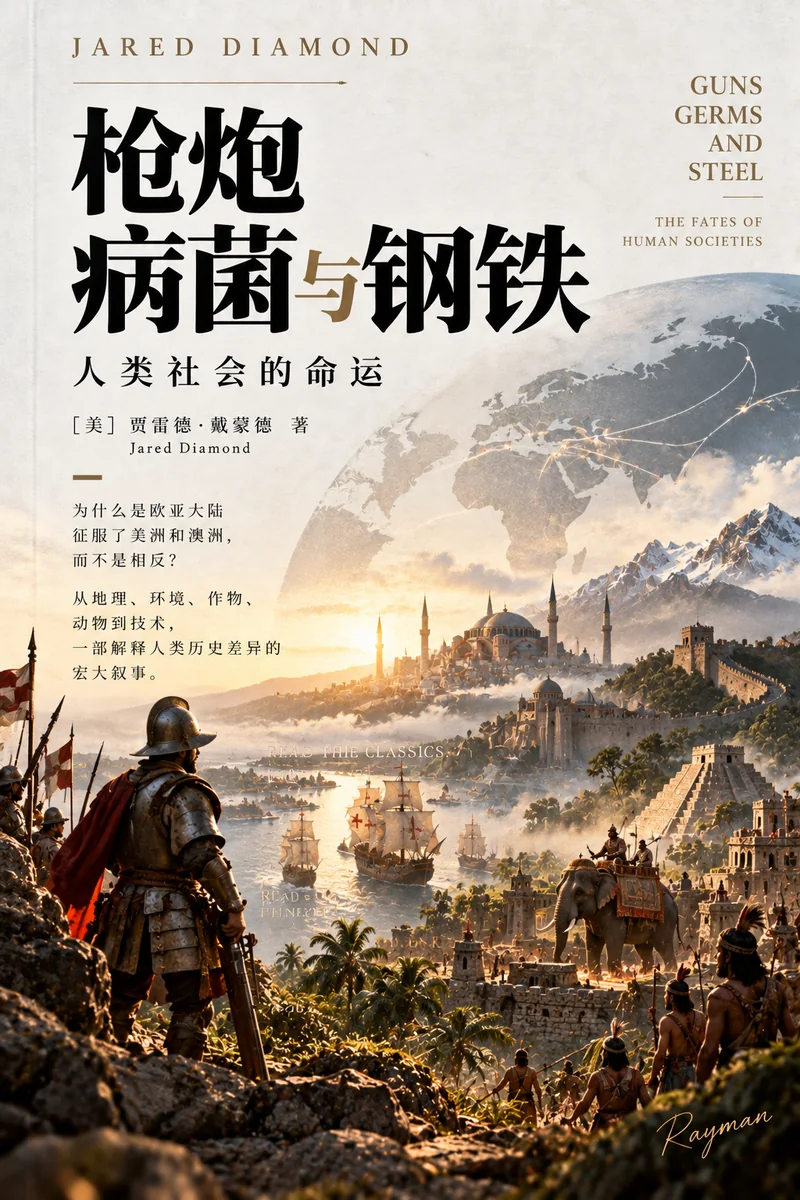
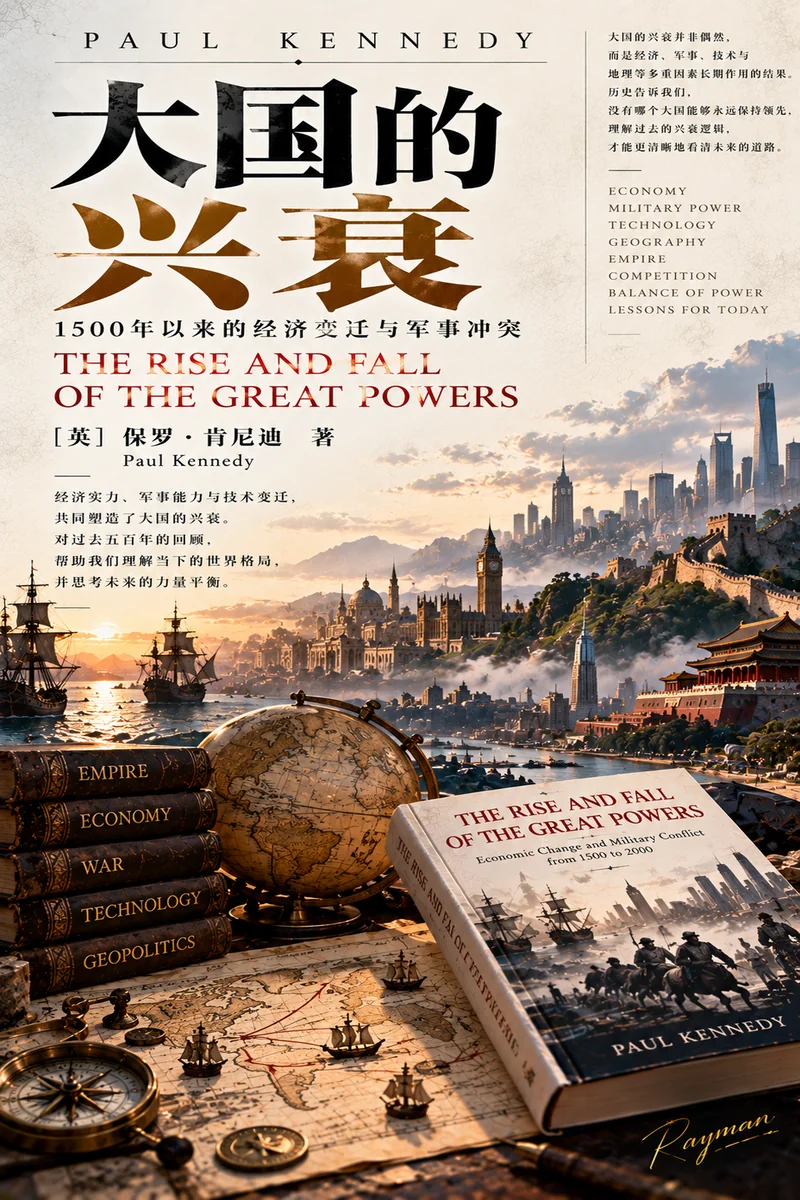
The necessary script is represented by Jared Diamond's Guns, Germs, and Steel and Paul Kennedy's The Rise and Fall of the Great Powers. Diamond deliberately rejects the old story that Europeans were smarter or harder working, and argues instead that Eurasia's overwhelming modern advantage was not cultural or intellectual necessity but geographic and ecological accident — a continental axis that let crops and livestock spread laterally, a concentration of domesticable species, and germs that were the byproduct of long coexistence in dense populations. Kennedy reduces the rise and fall of great powers to a material ledger: when a nation's military commitments persistently exceed its economic base, decline becomes almost an arithmetic necessity, a dynamic he calls imperial overstretch.
What is worth noting is that even the necessary script must admit contingency one layer down. Diamond's geographic advantage is itself only the accident of plate tectonics and climate; Kennedy's material arithmetic explains long-run trend but not which year a collapse strikes, or in what form.
The Opposition: Reading Everything as Contingent Slides Into Nihilism
It must be granted that the argument so far slides easily toward the opposite extreme: if everything is contingent, history becomes a lottery, the past offers nothing to learn and the future nothing to prepare for, and the whole point of studying history collapses.
The necessary camp's reminder carries weight. Some patterns recur because the constraints are real: resource-limited empires really do bleed out through over-commitment, and civilizations with open plains behind them really are likelier to be hit by pastoral forces. To file all that under "pure coincidence" is to ignore genuine structural force. Moreover, believing in a certain necessity is often politically useful — it concentrates resolve and mobilizes resources. A community that does not believe its own path is "necessary" struggles to survive long hardship.
So the defensible proposition is not "history is all contingency" or "history is all necessity," but this: the same stretch of history is contingent under a thin enough description and necessary under a thick enough one. Change the thickness and you change the conclusion.
Limits: The Real Error Is Single Causation
The genuine danger was never choosing contingency or necessity, but covering all of history with one script. To tell the First World War as "bound to happen" hides the part for which decision-makers were responsible; to tell the rise and fall of empires as "pure geography" erases the concrete choices of rulers. The two single-cause readings converge: both strip history of the texture from which anything can be learned.
A more hidden cost sits at the level of method. When we read the past as a single track, we unconsciously read the future as a single track too — and then either lapse into fatalism ("it will happen anyway") or into hubris ("I knew it all along"). Both cancel real judgement, which exists only at the moment you admit that things could have gone otherwise.
The Judgement
Three levels follow.
For the reader of history: treat historical narrative as a model, not a transcript. A good narrative tells you that under certain conditions certain things are more likely, not that a given thing was destined. The test of an honest history is whether it takes seriously the forks that did not happen but easily could have.
For decision-makers: the lesson is not to abandon forecasting but to separate trends that can be forecast from turning points that cannot. What you can bet on beforehand, and what you can build margin for beforehand, is the former; against the latter the only reliable defence is resilience, not prediction. Leaving margin for the unexpected road is precisely how one admits contingency.
For the individual: realizing that one's own existence is the product of a stack of extremely low-probability events naturally weakens a delusion — the habit of mistaking one's present circumstances, identity, and achievements for something that "had to be." Keeping contingency in view is not a recipe for passivity but for clearer stewardship of what one holds, and for humbler treatment of the disasters that merely "happened not to happen."
The use of history is not to prove that everything was destined, but to remind us that the track beneath our feet was laid by contingency and choice together, at countless forks in the road.