未签署的契约:我们向过去借来的秩序
Money, institutions and debt were mostly never voted on by the living. When order can be inherited without consent, what exactly is our relation to the past
One fact we avoid: most of our rules were never chosen by us
Open the operating manual of any contemporary society and you meet an uncomfortable truth: almost none of its clauses were voted on by anyone now alive. Currency systems, working hours, the forms of marriage, territorial borders, the grammar of a language, the accounting year, the retirement age — most were fixed at some distant moment by some group of people, then continued on their own, silent like a foundation.
This is not a metaphor. In 1587, A Year of No Significance, Huang Renyu argues that the Ming dynasty's predicament was not a bad emperor in some particular year, but a fiscal and bureaucratic logic set in early and already incapable of holding the complexity of the sixteenth century. Once an institution is formed, later actors can only maneuver inside its frame; even reform had to be justified as a return to the founding system. What a society truly locks in is not a single law but the permitted range of its own thinking.
So the question here is not whether tradition is good or bad. It is sharper: when order can be inherited without consent, what exactly is our relation to the past?
The metaphor of a contract needs its own qualification. Contracting requires that both parties be able to refuse, yet the dead cannot be a party and later generations never have a moment at which to say no; what passes for consent is mostly inferred from continued use, continued taxation, continued speech in a given language. Presumed consent suffices in some settings, but it conflates having no exit with having expressed acceptance, and that difference is precisely what this essay is trying to ask about.
Three unsigned contracts
The things we inherit from the past split into three classes, often conflated.
The first is the material and technical substrate: irrigation, road networks, transistors, power grids. We are born onto ground others laid. Much of present prosperity is the dividend of generations of accumulated technique, not evidence that this generation is cleverer. This legacy is almost pure asset, the least disputed.
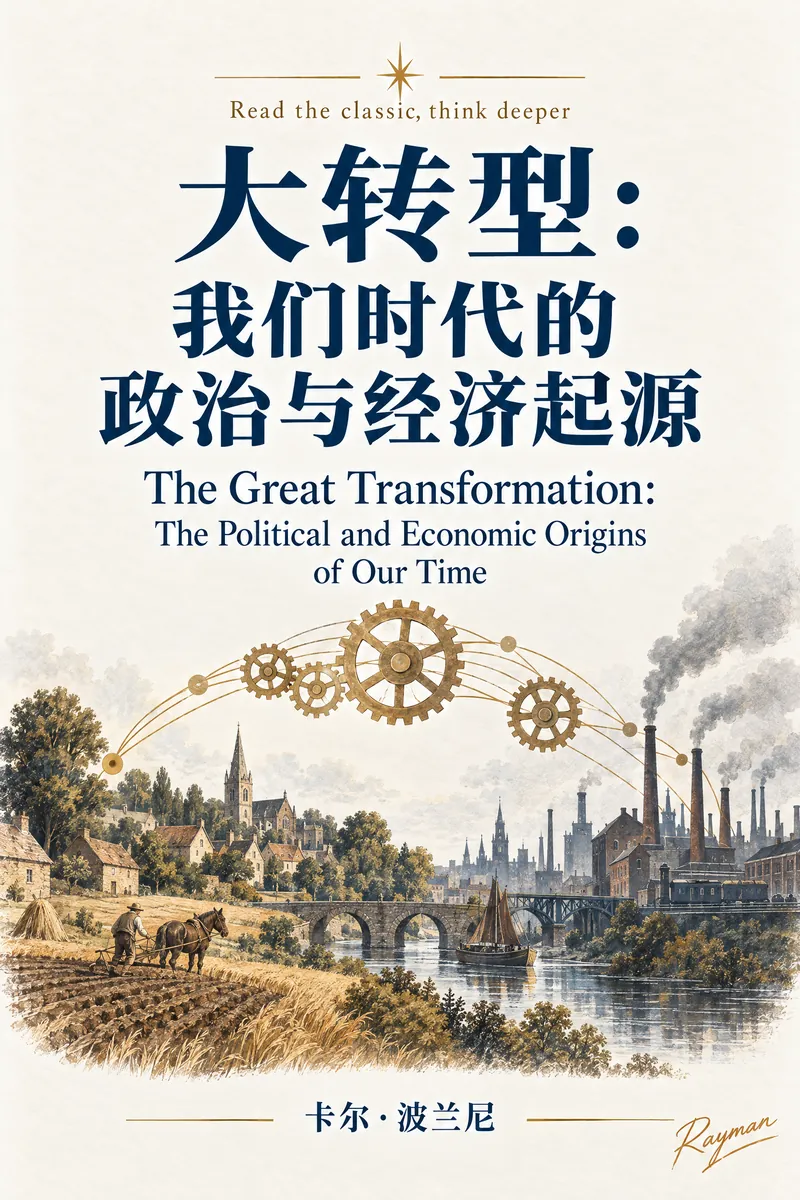
The second is institutions and rules. In The Great Transformation, Karl Polanyi makes the key claim that the "self-regulating market" was never self-generated; it was forced into "disembedding" by a series of nineteenth-century acts and policies, and when it threatened social survival, society had to legislate it back in. The market looks like natural order, but it was the political project of an earlier generation, taken by the next as given.
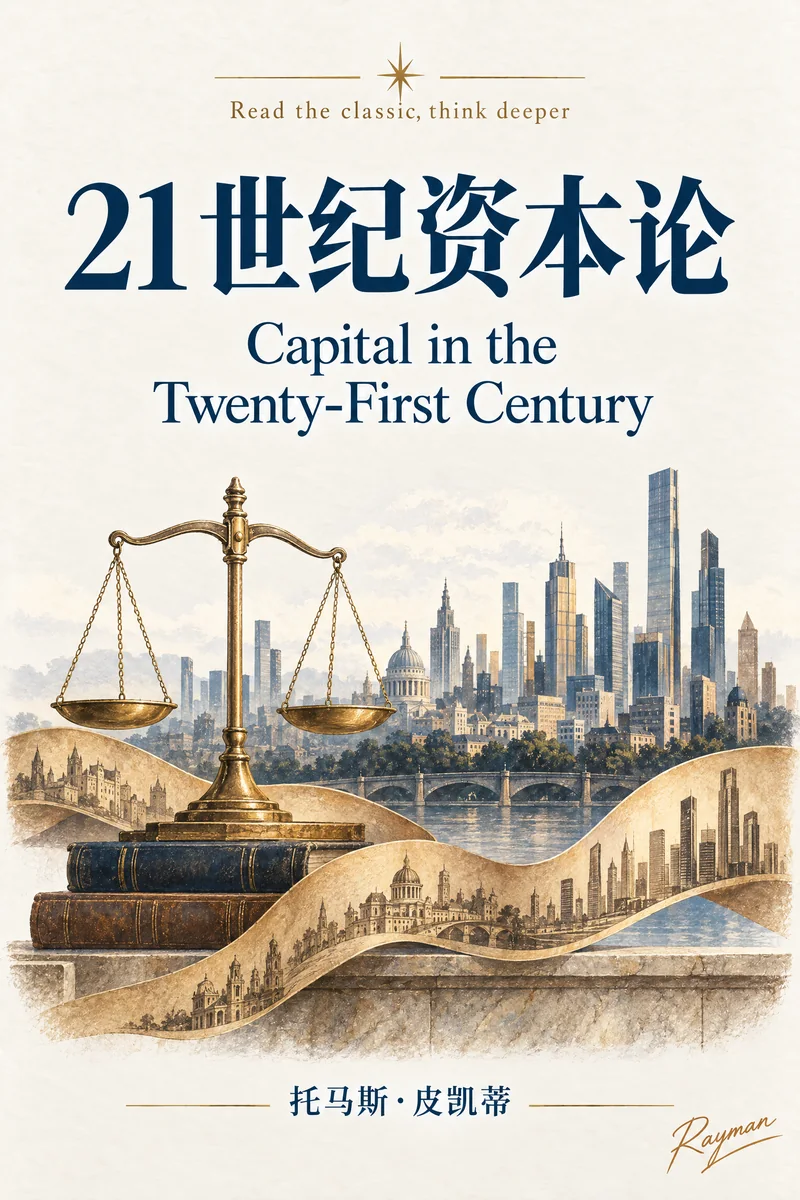
The third is debt and cost. In Capital in the Twenty-First Century, Thomas Piketty compresses modern wealth into one inequality: when the rate of return on capital persistently exceeds the growth rate, wealth concentrates in the hands of heirs, and the striver cannot catch the inheritor. Part of what some own today was never earned but simply transferred from the dead. Add climate, nuclear waste, public debt — the heavier negative bequests quietly slipped into the future's bill.
The first two are easy to honor, the third easy to forget. Yet all three share one feature: they bypass the question of whether you consented.
The third kind of bequest carries a special asymmetry: beneficiaries and bearers are not the same people, and the bearers are not yet born, so they hold no seat in any vote. Public debt can be rendered as a figure, while the horizons of climate and nuclear waste outlast the design span of most institutions, and even the rate at which the future is discounted is chosen by the present. Inheritance here is therefore not merely passive receipt but a power to set a price for descendants, and that power is rarely written into any document of authorization.
Why inheritance is always underrated
Underrating inheritance has structural cognitive causes.
Visibility bias: a foundation is invisible precisely because it carries everything visible. We praise a city's prosperity without crediting the property law and port siting fixed two centuries earlier; we complain something is inefficient without seeing that its inefficient shape was designed to prevent some worse collapse.
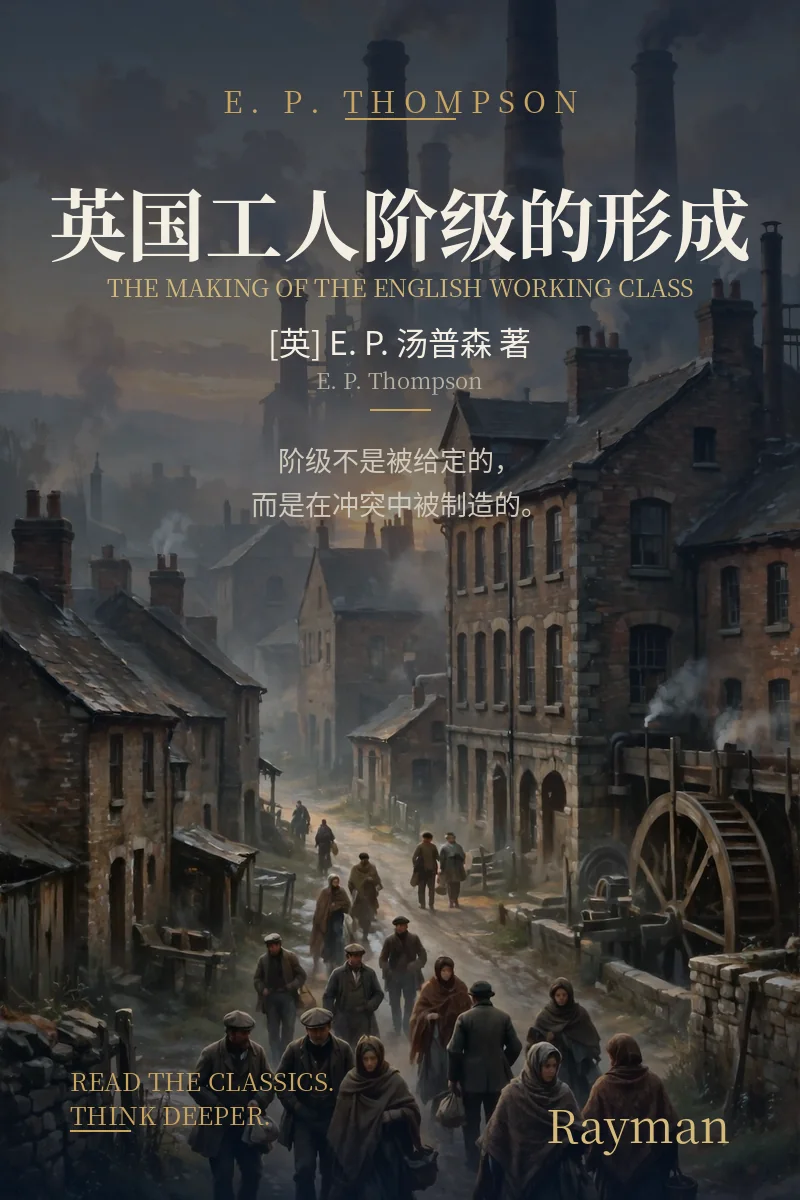
Present-centeredness: E.P. Thompson showed in The Making of the English Working Class that class is not a stone dropped from the sky but a historical relationship a group forged through shared experience. Yet those inside it treat the existing class position as natural and eternal rather than the product of a specific moment. To mistake the present for the eternal is to mistake inheritance for nature.
The simplifying impulse: just as we compress events into a single cause, we narrate society as founded by one great man or one revolution, erasing the slow, unsigned accumulations.
The most concealed layer of inheritance is language. An existing set of classifications decides which differences deserve a name and which can only be felt; when a society has just two words for a certain relationship, discussion struggles to cross the boundary those two words draw. Such a bequest is harder to notice than law or currency because it is not an object obeyed but a tool used to think, and any challenge to it must first borrow its vocabulary. Visibility bias reaches its peak here: the foundation not only holds up the house but determines which rooms the house can have.
The counter-case: blaming the past excuses the present
The strongest objection must be stated plainly, or this becomes cheap fatalism.
The sharpest rebuttal is that invoking inheritance is often a way to evade choice. When someone says "the system is just like this, it cannot be changed," they may simply be refusing the cost of change. Huang's Ming officials were not unaware of the problems; they were bound by vested interest and risk aversion — here "the past" is an alibi of the present, not genuine force majeure.
Further: many things we file under "heritage" are in fact actively renewed. The grammar of English, the retirement age, the worship of growth did not fall passively; every government and every individual re-signs them through compliance. Inheritance looks involuntary largely because too many choose not to choose. To offload all responsibility onto the dead is to release the living from their duty to sign.
Yet the counter-case cannot be pushed to an extreme either. Some constraints really are costly enough to change that they approach the unchosen: geography, infrastructure already built, an age structure formed over two centuries. Calling all of it changeable if only people willed it looks like granting agency but actually books costs that cannot be borne against those who cannot bear them, which is another form of excuse. The distinction turns not on strength of will but on who carries the cost of change and over how long; the more dispersed and delayed that cost, the more careless it becomes to call the matter a choice.
The limit: given versus continued
So the useful distinction is not tradition-versus-modern but two questions: which constraints are genuinely given and hard to alter, and which are choices we sustain by silence.
The former demands humility: you cannot rewrite geography in a day, undo two centuries of demographic structure, or flatten already-concentrated wealth. The latter demands honesty: when you could speak and stay silent, you are complicit, not a victim.
The test is simple. Ask: if everyone tomorrow simultaneously decided to stop doing this, would it survive? What vanishes was sustained by silence; what remains is the real bequest.
The test is harder to operate than it looks. For everyone to decide together tomorrow is a counterfactual, and collective action has a threshold of its own: even if each person wants change, whoever moves first loses, so the arrangement appears immutable. The continued and the given therefore often look identical in observation. A more usable substitute asks whether a minority can exit alone and at what price. If the exit is sealed, even a majority claiming consent describes something closer to a constraint than to agreement.
Judgment: act as an heir, not a victim
The conclusion is neither that we are enslaved by the past nor that we can reboot at will. We are both beneficiaries and re-signers of the bequest.
Honor and use the assets. Take institutions out of the category of "natural" and back into "someone's decision," restoring our license to decide again. Stop re-signing the negative bequests with silence. Adam Smith saw in The Wealth of Nations that the wealth from the division of labor is an accumulated, impersonal gift; but he also knew that this impersonal order most easily lets those inside it forget they remain its masters.
A mature society is not one that denies its inheritance, but one that can tell apart what it inherited from what it signed. The first deserves respect; the second must be owned.
Landing the judgment in institutions means turning renewal from silence into an explicit act. Periodic budget review, sunset clauses in law, administrative decisions required to state their basis and expiry are all devices of one kind: they do not prejudge whether a rule should be kept, only that it cannot be extended automatically because nobody objected. Their value is not efficiency but making who consented to what, and when, once again a matter of record. A society cannot choose what it inherited, but it can choose which things must be signed again.