隐性知识的重量:为什么流程取代不了手艺
From the corridors of Bell Labs to the fab floor, the hardest knowledge to copy is the knowledge nobody wrote down
A Concrete Puzzle
There is a recurring phenomenon in the semiconductor industry. A mature production line can be "copied" wholesale to another city: the same equipment list, the same process recipes, the same operating procedures, even the same engineers sent over to run it. Then yield drops, and it often takes years to climb back to where it started. Equipment can be purchased from a catalogue. Recipes can be transcribed line by line. Only the thing that makes all of it actually work refuses to travel with the documents.
This is worth treating as an intellectual problem, not merely an industrial footnote. It asks: what form does knowledge actually take? If knowledge were a body of recordable, transferable information, copying a production line would be equivalent to copying a document. It plainly is not. So we face a sharper question: under what conditions can knowledge be written down, and under what conditions does writing it down distort it?
The claim this essay defends is an uncomfortable one: the most common mistake of modern organisations is mistaking codifiable knowledge for the whole of knowledge. Processes, manuals, metrics and models are genuine achievements, but they cover only the thinner layer of what an organisation knows. The layer underneath — craft, judgement, sensitivity to anomaly — moves only through prolonged contact between people. Ignore it and efficiency keeps rising for a while, then breaks somewhere you did not expect.
There Are Two Kinds of Knowledge, and Only One Can Be Written Down
When Michael Polanyi introduced the idea of tacit knowledge in the 1950s, his central formulation was that we know more than we can tell. His examples were deliberately mundane. A person can recognise a friend's face among thousands and still be unable to say what the recognition consists of. A person can ride a bicycle and stay upright, yet the equations of torque are not what governs the body doing it.
The distinction matters because it draws a boundary. One part of knowledge is propositional: it can be judged true or false, written into a manual, examined, transmitted remotely, audited. The other part is dispositional: it appears only in a concrete situation, travels by imitation and correction, can only be judged by whether it works, and resists verification.
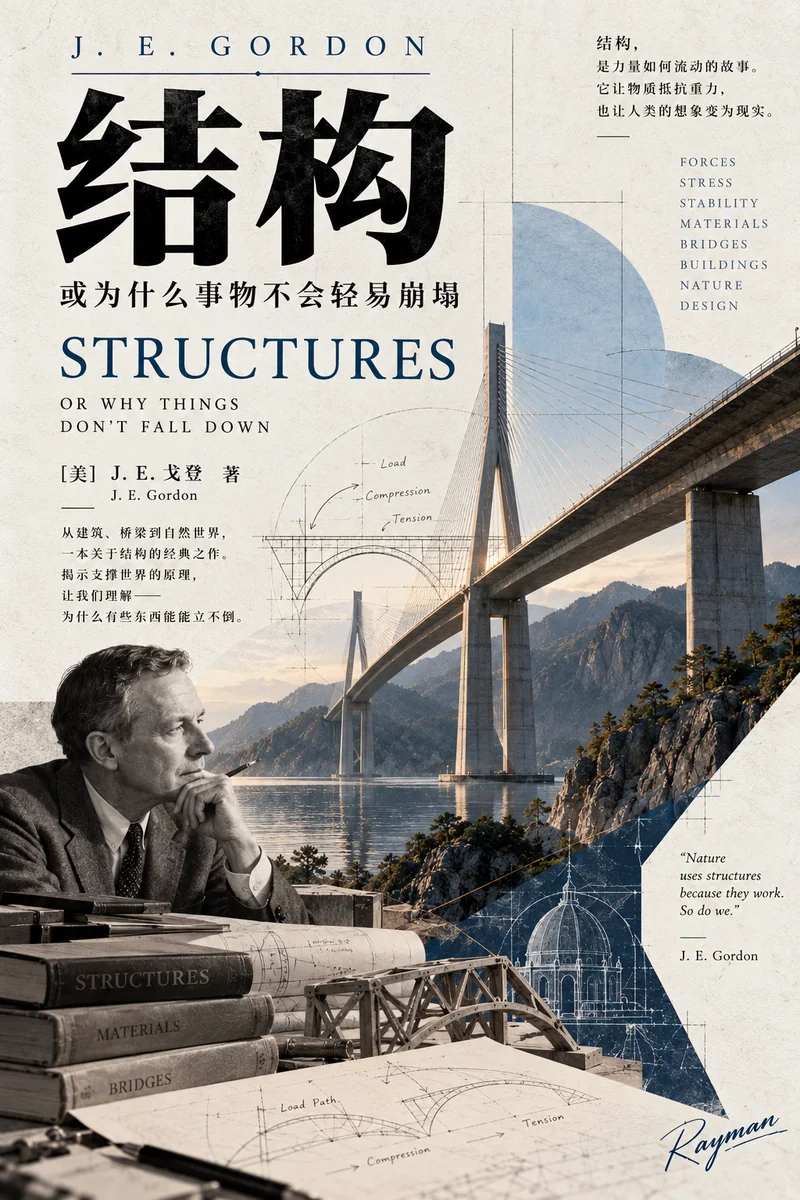
J. E. Gordon, in Structures: Or Why Things Don't Fall Down, keeps pointing at a gap. The theoretical strength of a material and the strength engineers actually rely on differ by orders of magnitude; the numbers they use come from accumulated experience, trade tradition, and a judgement that something is "about right." They do not solve for the beam before sizing it. They size it with approximate rules that time has filtered, and calculate only when they must. That is not laziness. It is an admission that in the real world, the border between what can be calculated and what must be judged is not drawn by theory.
Craft Lives in Distance
If tacit knowledge travels only through contact, then its transmission has three preconditions: close enough, long enough, and permitted to fail. Remove any one and transmission degrades into form.
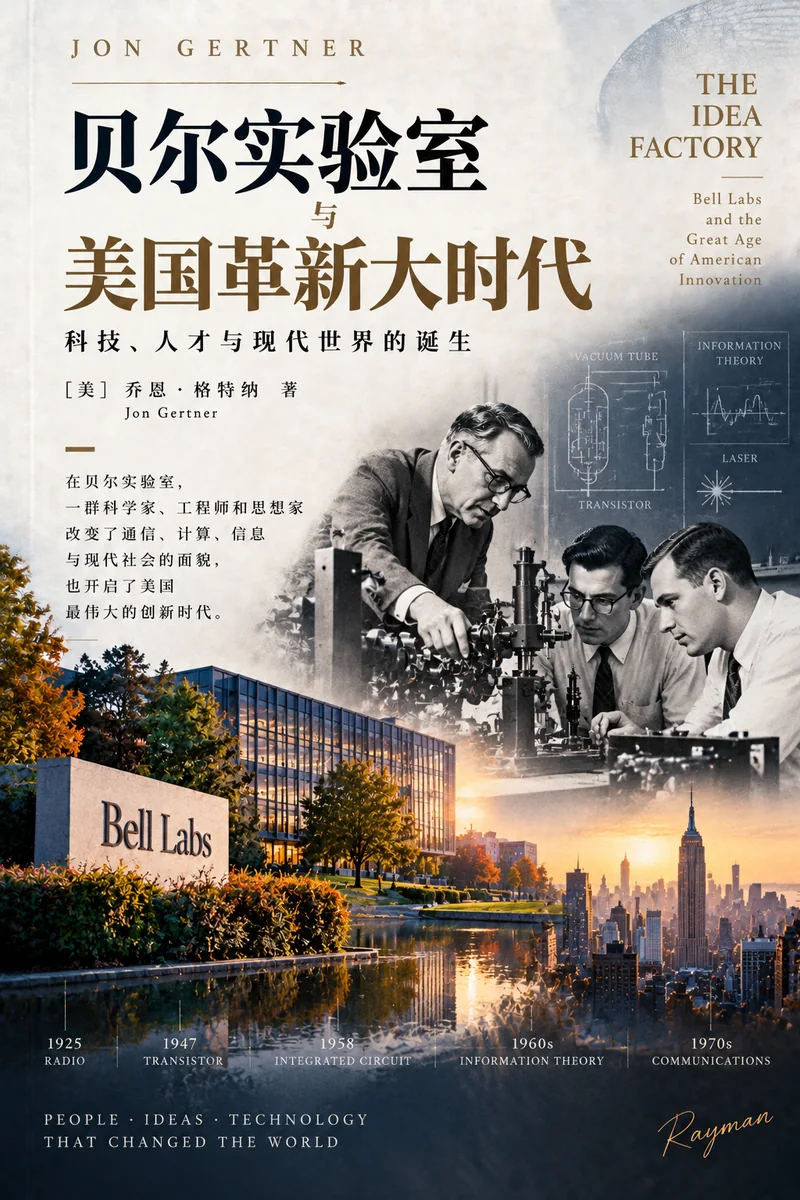
Bell Labs is the cleanest specimen. In The Idea Factory, Jon Gertner argues that the real invention was not a laboratory but a corridor. Mervin Kelly deliberately packed physicists, chemists, metallurgists and circuit people into the same building and the same hallway, so that they would interfere with one another over lunch and by accident. The transistor was not one person's flash of insight; it was what several disciplines produced after years of proximity. You can copy "create a research department." You cannot copy that density.
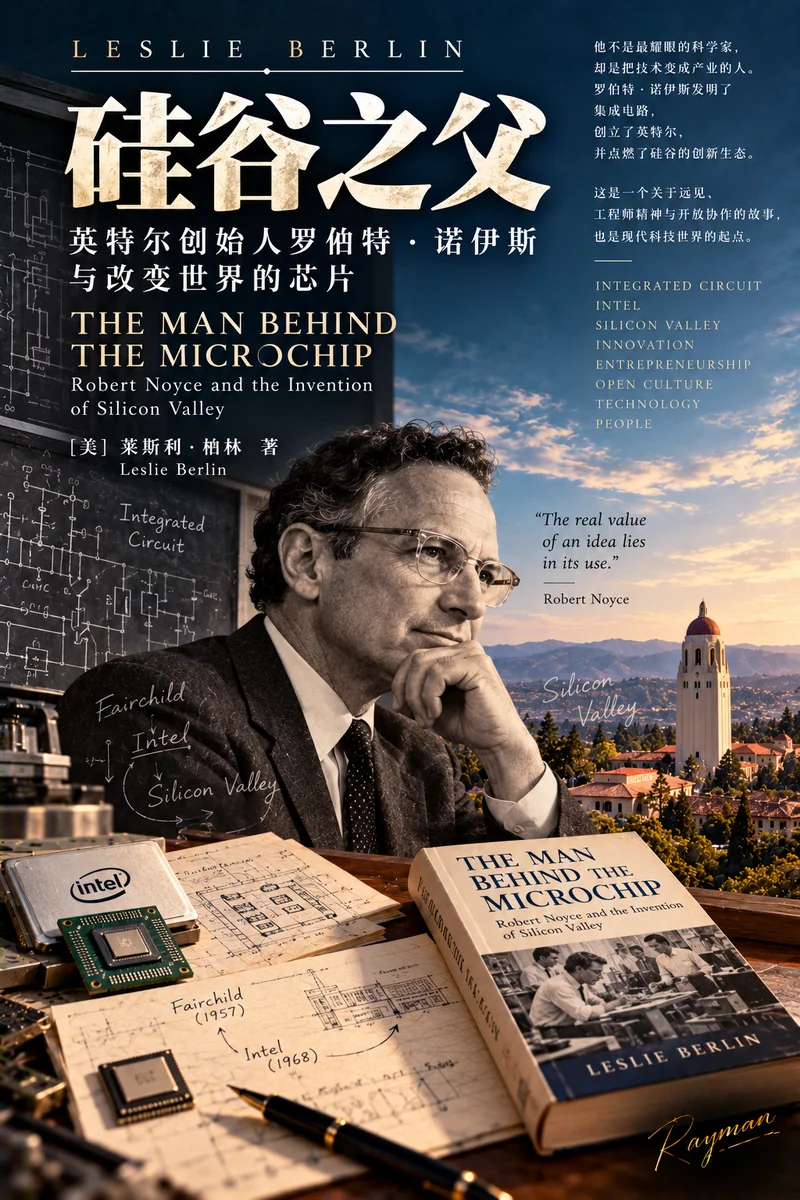
Crystal Fire supplies the other half: theoretical insight became a device only once process conditions such as materials purity existed. Pushing impurities from a few percent down to parts per million was a triumph of craft, and it depended on operating experience rather than on formulas. Robert Noyce's story in The Man Behind the Microchip works the same way. Fairchild behaved more like a school than a company: people left, firms split off, and experience diffused with the people. Technology transfer here was never document transfer. It was human transfer.
Feynman, in Surely You're Joking, Mr. Feynman!, insists repeatedly that what he genuinely learned he learned by calculating, taking apart, and repairing things himself. The "cargo cult science" he later criticised is precisely the imitation of form without the willingness to bear the risk of thought — which is exactly what tacit knowledge looks like after it has been superficially encoded. Every box ticked, the core hollow.
The Case Against: Process Is Not the Enemy, It Is the Scaffolding
It must be granted that the argument so far slides easily into a self-congratulatory cult of craft. The opposition has at least four solid points.
- Codification is one of humanity's greatest achievements. Moore's Law held for decades precisely because repeated work was standardised, measured and automated. Without codifiable process there is no yield, and without yield there is no semiconductor industry. To attack codification is to attack the foundation of modern industry.
- Much "tacit knowledge" is bad habit that deserves to die. Inside a veteran's touch, one part is valuable judgement and another is unexamined convention. Sanctifying the latter is really a way of shielding incompetence from accountability.
- Codification manufactures new tacit knowledge. Each time a layer is written down, people are freed to work one level up. Spreadsheets did not abolish accountants; they pushed them toward analysis. Knowledge is not transferred so much as re-stratified.
- AI is moving the boundary. Large language models are the strongest encoding machines in history, turning a great deal of what was thought ineffable — register, convention, common error — into callable patterns. That directly weakens the strong version of the claim.
All four hold, so the thesis has to be narrowed. The defensible proposition is not that tacit knowledge cannot be encoded, but that the marginal return on encoding is extremely uneven across layers of knowledge. Where work is stable, repeatable and measurable, encoding almost always wins. Where the environment keeps drifting and the task is to judge boundary cases, the return falls away quickly.
Limits: Rules Handle the Normal, Judgement Handles the Edge
A rule is a compression of situations that have already occurred. The more effective a rule is, the more stable the environment it faces — the applicability of rules and the stability of the world are two sides of one fact.
Value shows up where rules fail: anomalies, genuinely new situations, and trade-offs between rules that contradict each other. Hence a counterintuitive corollary: the more successful the encoding, the scarcer judgement becomes. Once process has eaten the routine work, almost everything left is an exception, and exceptions cannot be processed by process.
Worse, over-encoding erodes the mechanism that reproduces judgement. If every role is fully defined by procedure, newcomers never get the loop of getting it wrong, being corrected, and trying again. The organisation then acquires a structural brittleness: extremely efficient under normal conditions, extremely helpless outside them — which is exactly where crises happen.
A measurement bias compounds this. What can be measured is easier to manage, and so it gets over-managed; what cannot be measured is systematically underweighted and eventually quietly exhausted.
The Judgement
Three levels follow.
For organisations: treat the reproduction of tacit knowledge as capital expenditure, not overhead. The relevant measure is not process coverage but whether critical experience has a successor. A more honest metric: over the past year, how many hard problems were solved independently by people with no senior engineer in the room?
For individuals: codifiable skills will keep depreciating, but judgement does not grow out of nothing — it is the residue of a large amount of concrete doing. The right strategy is therefore not to flee hands-on work but to choose domains where doing and judging are closest together, so that what you do by hand is exactly what you must judge. Spending a career only on work that process has fully defined is a slow way of losing your bargaining position.
For the age of AI: models will eat a large middle layer without conjuring judgement out of nothing. They push people toward two ends — routine work that can be fully replaced, and consequential work that requires someone to own the outcome. Judgement can only be supplied by someone who has done the thing. What is worth investing in, then, is capability that can only be earned by doing the work yourself.
The weight of knowledge is that someone has to carry it personally. The part that can be written down is only its shadow.